Troyer equips landmark hydropower projects in Nepal
Bild: © Troyer
In the past few months, Troyer AG, a hydroelectric company based in Sterzing in South Tyrol, has equipped not one – but two Himalayan hydroelectric power stations with their turbine technology. Troyer supplied the Mewa Khola power station in eastern Nepal with three Francis turbines, the largest of their kind to date; each with a capacity of 18.3 MW. In parallel, the Alpine hydro-industry specialists have also been working towards completion of a power station project at Seti Khola, around 130 km west of Kathmandu, requiring two slightly smaller Francis turbines. Technology produced by these highly experienced South Tyrolean engineers is in great demand in the Himalayan state of Nepal, not least due to their extensive expertise in high-pressure Alpine hydroelectric power stations. Indeed, Troyer’s next power plant project, Upper Madi, is now ready to commence.
Nepal expands hydropower with Alpine turbine technology
Nepal is undergoing a phase of dynamic expansion. There is a sense of optimism in the energy sector in an area that currently offers around 3.9 GW of installed hydropower capacity. This is hardly surprising considering technical and economic viability has been estimated for approximately 42 GW of available hydropower potential. Politically, the hydropower sector is a clear strategic driver of development. The government is consciously pursuing a policy towards an export-oriented hydropower system that builds up surpluses in the rainy season, which can be sold via regional electricity markets – particularly to India – and increasingly to Bangladesh. However, there are significant structural constraints, not least the very seasonal rhythm of river flows, the low availability of storage and regulating power stations up to now, and due to bottlenecks in the national and cross-border transmission grid. All such factors limit economic exploitation of the new capacities. So, in this context, these may seem highly ambitious political goals: By around 2035, the country is targeting installed capacity growth to well over 28 GW, with Nepal gradually carving out a role as a major electricity exporter in the region. A precondition for this will be that grid infrastructure, financing and regulatory stability develop at the same pace as power plant construction.
© Troyer
Alpine hydropower expertise meets Nepal’s high-head conditions
Although Nepal has certain unique features, the specific conditions for hydropower development in the Himalayan nation are quite similar to those of Alpine regions: large heads, steep valley slopes, and several tributaries offering high energy yields. These are all ideal conditions for high-pressure plants. Without doubt, the expertise won from the historical development of Alpine high-pressure power stations is paying off. Over several decades, working under extreme load cycles in the Alps, Pelton and Francis impeller technologies have all been developed and perfected – along with expertise in materials and coatings, erosion protection, and control and operating strategies. The aim has always been to ensure each plant operates efficiently and stably over long periods, requiring little maintenance. This matches Nepal’s requirement profile perfectly, where ‘robustness and high-yield performance’ are required – despite, in some areas, high sediment loads, demanding topography, restricted accessibility, and challenging hydrological conditions. As a high-quality manufacturer from South Tyrol, Troyer’s successful involvement in various Nepalese hydropower projects can be explained to a significant degree by the combination of tried-and-tested expertise and industrial precision they guarantee. Turbines designed for durability and ease of repair maintain high efficiency, even under extreme conditions. Year after year they deliver exactly what operators in Nepal need – a reliable supply of kilowatt-hours.
Mewa Khola Hydropower Plant equipped with Troyer’s largest Francis turbines
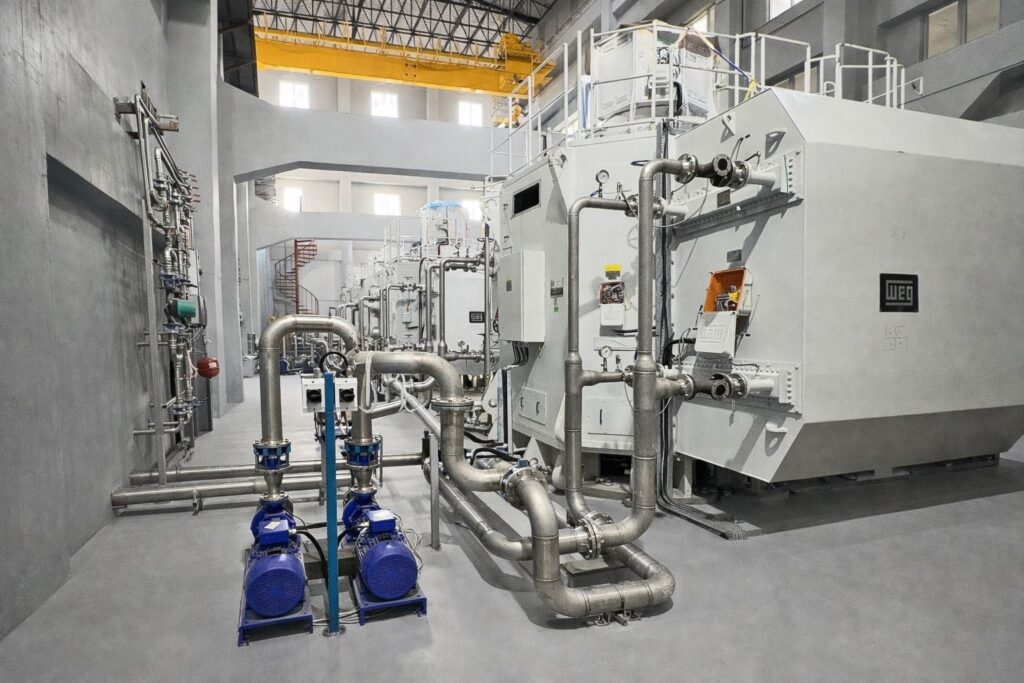
Having now completed these latest reference projects in Nepal, they clearly represent genuine milestones in Troyer’s history – above all the Mewa Khola power station project. Although the company has 90 years of experience to fall back on, the largest vertical-shaft Francis turbines the company has ever manufactured were installed last year at a site in the east of the country, around 200 kilometres from the Nepalese capital. Three identical Francis turbines, each with a nominal output of 18.3 MW, were supplied for the Mewa Khola power plant to secure a total plant power production capacity of 55 MW. Each of these turbines is designed for a net head of 188 metres and a maximum flow rate of 11 m³/s from headwater channelled from the intake structure to the turbines via a five-kilometre underground penstock. A 12-km 132-kV transmission line feeds electricity generated at the Mewa Khola power station onto the national grid. In the future, the operators expect to achieve an average annual output of approximately 300 GWh to meet the electricity needs of around 90,000 households in the region. Construction at the Mewa Khola project site began in 2020/21. Following a scheduled implementation phase, the power station is now awaiting the start of trial operations.
© Troyer
Comprehensive electromechanical package for the Seti Khola Hydropower Plant
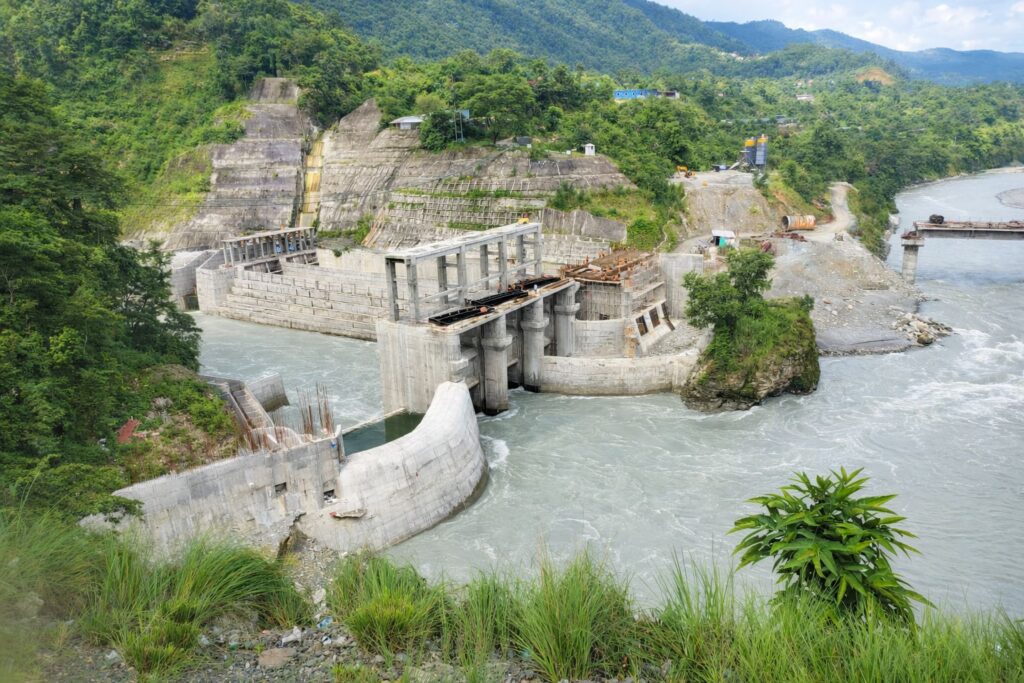
Troyer AG’s sophisticated Francis turbine technology was also requested for the Seti Khola power station project in Gandaki Province, around 130 km west of the Nepalese capital, Kathmandu. At the Seti Khola run-of-river power station, the South Tyrolean hydropower specialists were given awarded contracts to provide two 11.5 MW-rated Francis turbines, and for installation of the entire electrical system – from the generator to the high-voltage (132 kV) transfer point. This included the generators, medium-voltage switchgear, transformers, the high-voltage substation and protective devices. Troyer also supplied the power station’s control and automation system. The immensely experienced South Tyrolean hydropower experts faced a major challenge posed by the extremely high lime content in the water, necessitating special technical modifications to the turbines. Indeed, ‘Seti’ actually means ‘lots of lime particles dissolved in water’. Installation work is now nearing completion at the Seti Khola power station. The new power station is expected to supply a total of around 133 GWh of electricity in an average year – around 90 GWh from the rainy season, and the remainder to be produced in the dry season.
© Troyer
Upper Madi cavern hydropower plant presents new engineering challenge
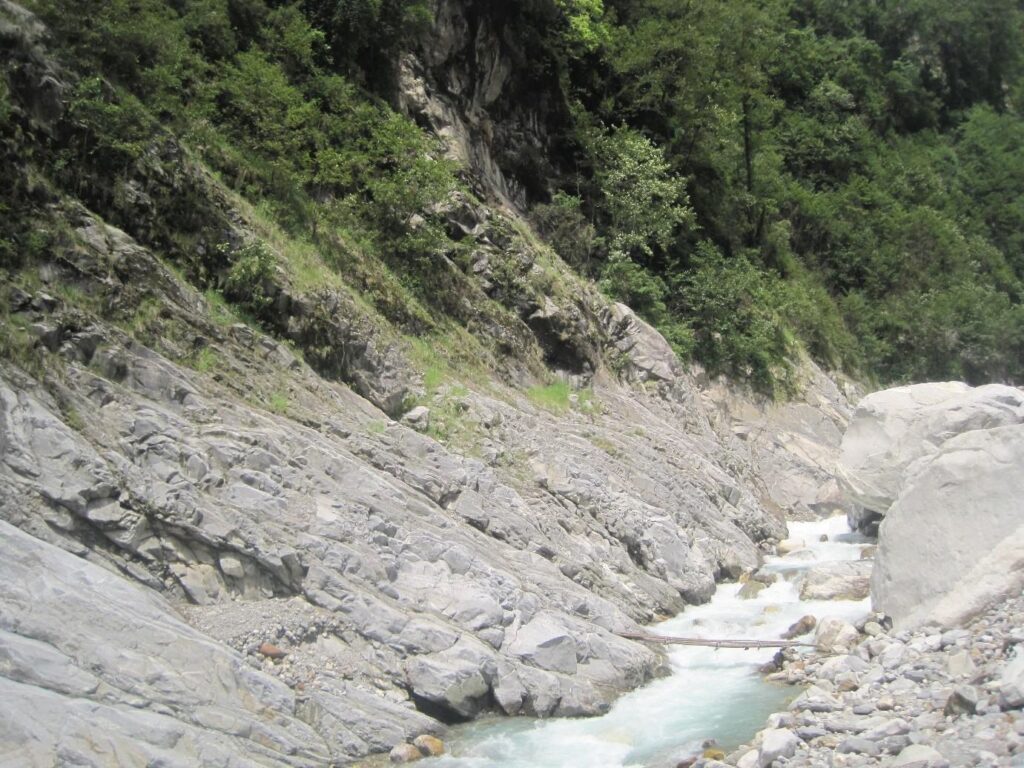
Construction at the Kaski district Upper Madi hydropower project on the Madi River, around 20 kilometres north-east of Pokhara and approximately 150 kilometres from Kathmandu, is now well underway. The contract with Troyer AG was signed in April 2025, assigning Troyer responsibility for providing all of the electromechanical infrastructure – from planning through to commissioning. The equipment included three vertical 4-nozzle Pelton turbines and the entire electrical system – the generator, medium-voltage switchgear and transformers, a high-voltage 132 kV GIS substation, and the control and automation technology. The three Pelton turbines are designed for a turbine output of 15 MW, accommodating a nominal head of 407 metres and a maximum flow rate of 4.2 m³/s per turbine. This gives the plant a total capacity of 45 MW at a total maximum flow rate of 12.6 m³/s. Generally, in Nepal, it is the demanding logistics and the difficult conditions during site preparation and work supervision that pose the greatest challenges. However, Upper Madi presents an additional layer of technical and organisational complexity: To date it is the first and only Troyer project in the country to be implemented and housed entirely within a cavern – and is considered to be the first high-pressure power station in the Himalayan region in which all structures – including the intake, headworks, power station and substation – are housed underground in a cavern. So it’s obvious how Upper Madi is representing a new and particularly exciting challenge for Troyer.
Troyer expands its hydropower presence in Nepal
Troyer AG’s latest power station projects in Nepal have demonstrated both their vast expertise in hydropower technology, and underlined the company’s long-term strategy for the region: “Troyer is now well established in Nepal, having worked on a total of 16 projects in the country. We have earned the complete confidence of power plant operators in this Himalayan nation, and this has strengthened our presence throughout the Himalayan region for the longer term,” emphasises Pawan Dhakal, Managing Director of Troyer’s Indian branch. The company is also continuing to expand its local infrastructure: “We enjoy the overwhelming trust of existing and new customers and are expanding our presence with a local service office, including a spare parts warehouse, to provide customer support from a local base.” The South Tyrolean hydropower specialists believe from a sales perspective, too, that Nepal is a market of the future: “We are proud to be contributing our experience and technology to projects that are ground-breaking – for both Nepal and Troyer,” declares Hanspeter Schölzhorn, Sales Manager at Troyer, noting that the branches in Nepal and India enable the company to guarantee high-quality, collaborative partnerships with customers. Troyer‘s commitment is helping to enhance Nepal’s energy independence, and is making a significant contribution to sustainable, clean electricity generation, economic development and long-term security of supply. As a country rich in hydropower these are crucial building blocks for climate protection in Nepal.