Global Hydro’s Next-Generation Service Concept Sets New Standards
Bild: © Global Hydro
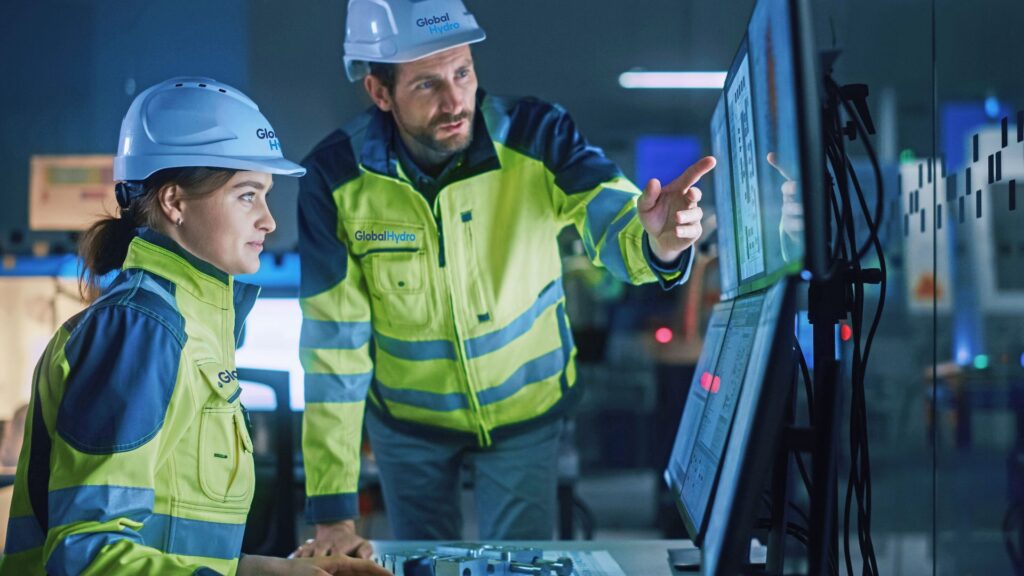
Global Hydro, the Upper Austrian hydropower specialist is demonstrating why he is regarded as undisputed pioneer in digital solutions for hydropower. In 2025, Global Hydro launched ‘HybridService‘ – an AI-driven maintenance management system in which digital monitoring and data-based analyses interact to guarantee continuous assessment of plant conditions and ensure targeted on-site service visits. This enables for more flexible maintenance planning, enables earlier fault detection, and continuous operational process optimisation. The current-status-based service concept combines digital tools with technical expertise, while creating a transparent foundation for well-informed maintenance decisions, and could soon establish a new universal technical benchmark in hydropower.
© Global Hydro
Predictive Maintenance Becomes a Strategic Factor in Hydropower
Scheduled maintenance alone can no longer meet current requirements in hydropower, nor can it meet the expectations of power plant operators. The key operational requirements are optimum plant availability, predictable cost structures and maximum operational reliability – despite increasing costs and growing technical complexity. Actual maintenance effort is not the key; instead it is the avoidance of downtime, as Thomas Stütz, Head of Digital Solutions at Global Hydro, explains: “Unplanned or unnecessary shutdowns are direct causes of significant losses in revenue, particularly at high-performance plants. Therefore the focus is on shifting towards clear data on plant conditions, proactive intervention planning and sound decision-making. A parallel development has been the increase in the importance of market orientation for power plant operations. Flexible electricity marketing, particularly in the ‘day-ahead’ market, relies on precise predictions of availability. As a result, maintenance is becoming an increasingly strategic issue, both in terms of technical reliability, and the economic performance of a power plant.”
HybridService Combines Practical Expertise with Digital Intelligence
Initial impetus for the development of HybridService came from a simple but significant insight. Often, maintenance-linked downtime costs at a power plant significantly exceed actual service expenditure. Analysing the issue from this perspective enabled engineers at Global Hydro to begin scrutinising existing maintenance processes systematically. Thomas Stütz provides the example of an actual maintenance project at a low-pressure plant at which the alignment of the shaft had previously been re-measured at set intervals: “The effort was enormous, involving the installation of stop logs, pumping out the turbine chamber and included several other tasks – all just to measure shaft alignment. The process led us to realise that shaft imbalance could also be detected on the vibration spectrum. Vibration data also provides insight into cause, allowing conclusions to be drawn about changes in conditions. Fortunately, the customer had already subscribed to our analytical tool for optimisation, HydroxOptimize. The data it recorded enabled us to identify tasks that could be performed digitally – ones previously carried out on-site by the service technician. Having analysed each step, it became clear that a significant amount of downtime could have been avoided – and this is what initiated the development of HybridService.” The findings led to a clear development approach – away from rigid, calendar-based maintenance scheduling, and towards a consistent data-driven service concept based on actual conditions. HybridService determines that maintenance measures can be carried out when they are technically necessary, critical measures prioritised, and unnecessary interventions avoided.
© Global Hydro
Continuous Data Analysis Detects Trends and Anomalies
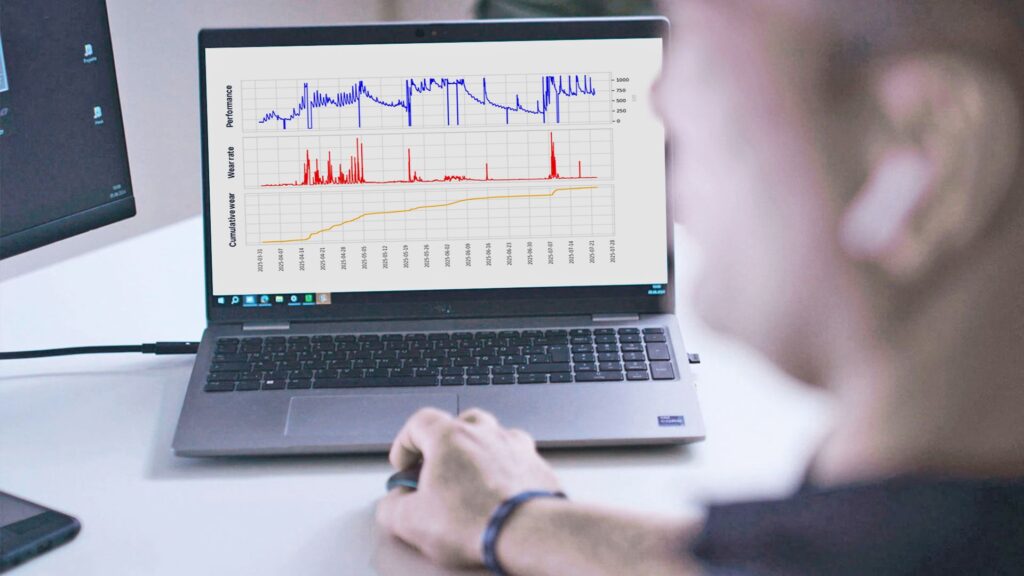
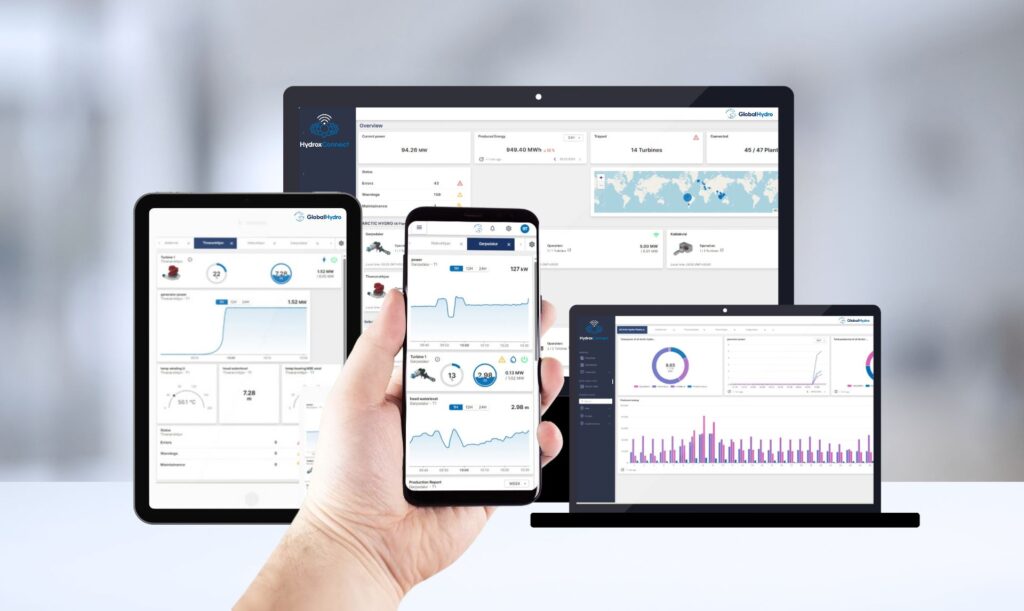
A central CMMS (Computerised Maintenance Management System) lies at the heart of Global Hydro’s HybridService. It documents every aspect of maintenance and inspections, whether conducted by the operators themselves or by Global Hydro. HydroxOptimize is used for digital inspections before any scheduled maintenance measures are implemented. The module evaluates plant operations and conditions continuously, analysing and optimising them using the latest available data. It identifies trends and anomalies to form the basis for informed decision-making. The digital assessment determines whether planned maintenance or inspection work is actually necessary, whether individual tasks can be omitted or postponed, and whether additional measures are required. Only then are specific tasks defined. Thomas Stütz adds: “This avoids unnecessary interventions, while ensuring potentially critical developments are identified and remedied at an early stage. HydroxConnect enables secure data transmission, transparent visualisation, and combines these to generate a reliable service concept based on real-time data. Although the plant does not operate autonomously, it is supported by intelligent systems that plan specific necessary maintenance steps, reducing downtime and maximising availability in the long term.”
“Transitioning from preventive to condition-based maintenance increases planning precision significantly and omits unnecessary on-site service calls”
Thomas Stütz, Head of Digital Solutions at Global Hydro
From preventive servicing to condition-based maintenance
Thomas Stütz, Head of Digital Solutions at Global Hydro, cites servicing the oil in a hydraulic power unit as a clear and practical example of the new benefits. Originally, this maintenance was purely preventive and carried out at fixed intervals – typically every three years or after several thousand operating hours – as defined by the CMMS as a digital representation of the maintenance calendar. Accordingly, a maintenance notification, known as a work order, was automatically triggered at fixed intervals. HybridService takes this approach a decisive step further, as the CMMS is linked intelligently to Hydrox-Optimize telemetry data and analytics functions. A model continuously monitors the actual oil quality, based on parameters such as water content and conductivity. Instead of scheduled intervals, maintenance is only triggered if a critical trend emerges and predefined thresholds are exceeded. “The transition from preventative to condition-based maintenance enables significantly greater precision in planning, and cuts out all interventions that are not required. The entire process is now documented. Once a work order has been issued, the service technician works through the task list stored in the system. Full documentation is generated automatically, including photos, readings and supplementary files,” Thomas Stütz explains.
© Global Hydro
Artificial Intelligence Supports Smarter Maintenance Decisions
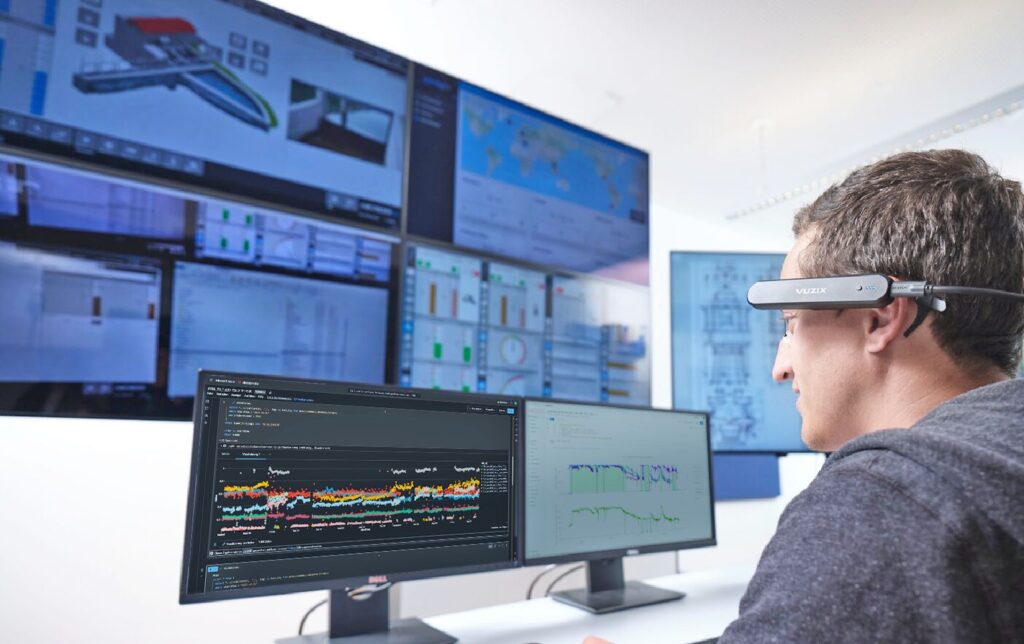
homas Stütz explains how HybridService is a self-optimising system, and the role played by artificial intelligence: “The plant itself does not have independent decision-making autonomy, but it is supported by highly intelligent systems that facilitate a continuous comparison of target and actual conditions. The system continuously compares the stored optimal operating state with real-time operational status data.” In this way, trends, deviations and anomalies can be detected at an early stage. Self-optimisation does not take place at the level of a single software component, but within the overarching HybridService process.
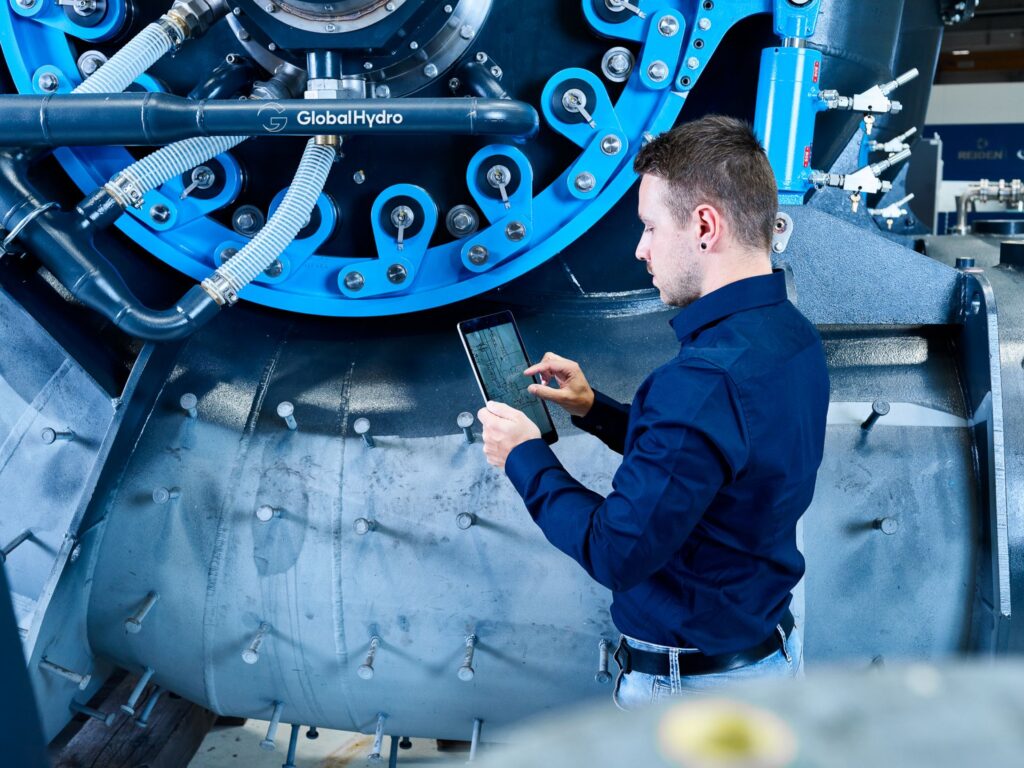
HydroxOptimize runs continuous data analyses, identifying anomalies, while experienced service and operations experts interpret the results to devise the appropriate solutions. This creates a watertight learning process that integrates new insights directly into the optimisation of maintenance and operational decisions. Artificial intelligence is used specifically as a support system, in particular to identify patterns, analyse trends and detect anomalies. Nevertheless, according to Thomas Stütz, there is a conscious decision to leave the final call up to humans: “Every plant has unique characteristics that require technical understanding and experience, so our experts are still indispensable, especially for safety-critical assessments and complex correlations.” This approach enables HybridService to combine data-driven AI assistance with human expertise, creating a system that continually improves without relinquishing control.
© Global Hydro
Combining Multiple Measurements for Reliable Diagnostics
A detailed picture of the plant’s condition forms the basis for decision-making in HybridService. This is derived from a wide range of machine-related measurements, such as temperatures, vibrations, pressures, electrical performance data, water levels, net heads, as well as control variables such as the opening of wicket gates or nozzles. These are supplemented by process data and readings taken in the surrounding machine environment, in turn aiding the correct interpretation of operational correlations. Specific sensor technology is integrated according to the plant and application. Distortion forces are measured to assess smoothness of operation for wicket gates or to gauge necessary runner adjustments. Pressure profiles are analysed in sealing systems to detect wear at an early stage. Oil quality sensors play an important role, especially with larger volumes of oil, as they monitor the actual condition of the oil precisely. Thomas Stütz explains: “In many cases, it is not single readings that decide, it’s the interaction of various data points over time. Reliable trends, deviations and anomalies can only be identified by combining several parameters.”
Practical Applications Demonstrate Measurable Benefits
Here are two real-world examples to illustrate what HybridService can do: In a Pelton hydropower plant, continuous status monitoring enabled early detection of impending bearing damage, earlier than would have would have been detected during a routine on-site inspection, and well before any actual failure occurred. This way, the operator had sufficient time to procure the required spare part and schedule the replacement for a period of low productivity – avoiding unplanned downtime, reducing risks, and ensuring the intervention was an efficient use of time. In another case, a custom-developed model was used for assessing wear on labyrinth sealings, especially in systems with high sediment loads. Pressure changes within the sealing chambers, increases in axial forces, and elevated axial bearing temperatures can be analysed, and correlated with efficiency losses. This produces a reliable prediction of the best time to replace a sealing, the aim being to utilise components economically for the maximum possible duration without risking damage. Both cases show that data-driven analyses can enhance technical safety and generate economic benefits. Initial operational experience has confirmed the benefits – with the number and duration of on-site inspections, and the associated plant downtime, having been reduced by approximately 25%.
© Global Hydro
Continuous Monitoring Reduces Downtime and Operating Costs
Conventional service approaches usually only provide isolated snapshots, whereas – for the first time – seamless monitoring allows developments to be assessed over time. Trends, patterns and sudden deviations become identifiable and can be interpreted accurately. This is the key benefit offered by HybridService. Anomalies are detected at an early stage, maintenance measures can be planned proactively and interventions scheduled ideally to prevent damage and avoid unplanned outages. There are economic benefits from reduced service costs, but above all from shorter and more predictable downtimes. In general, continuous monitoring, intelligent analysis and targeted measures combine to lower overall costs, while simultaneously increasing availability and operational reliability. Although the potential economic benefits are particularly high for large plants, HybridService is by no means only of benefit to them. Smaller power stations benefit greatly from optimal monitoring and increased operational reliability. Risks are identified early, even without extensive on-site visits or complex maintenance arrangements.
“In recent years, technological advances have demonstrated just how rapidly this highly dynamic field of data-driven models and artificial intelligence is evolving. As a result, the focus has been on the continuous expansion of HybridService.”
Thomas Stütz, Head of Digital Solutions
HybridService Continues to Evolve
In terms of future development, those responsible for HybridService at Global Hydro emphasise that the system is by no means static – indeed, it is being continuously developed as a learning system. Thomas Stütz explains: “In the highly dynamic environment of data-driven models and artificial intelligence, long-term forecasts spanning five to ten years are only of limited reliability. The technological advances of recent years have shown just how rapidly this field is developing. Consequently, the focus is on the ongoing expansion of HybridService – adding analytical models to map further maintenance and inspection areas in the digital realm, generating even more accurate forecasting, and strengthening the integration of operations, service and external conditions.” A key development in this regard has been the integration of factors such as electricity price models and inflow forecasts from the energy market. Now, maintenance windows can be planned not merely for technical optimisation, but with an eye on the market, and oriented according to revenue. In parallel, functionality in HydroxConnect is being expanded continually to enhance the transparency and efficiency of planning, documentation and the tracking of measures.
In the broader context, HybridService can serve the requirements of modern power plant operators very precisely. There has been a move away from rigid, calendar-based maintenance plans towards data-driven, predictive and condition-based approaches. This shift is not restricted to hydropower, and can be observed globally across the entire industrial sector. Seen in this context, HybridService has the potential to establish industry benchmarks in the years to come, rather than remaining a specialised solution. It represents a logical service philosophy evolution that harmonises technical reliability, economic efficiency and high operational availability.
© Global Hydro