Legendary Mountaineering Village Modernises Möll Hydropower Plant
Bild: © zek
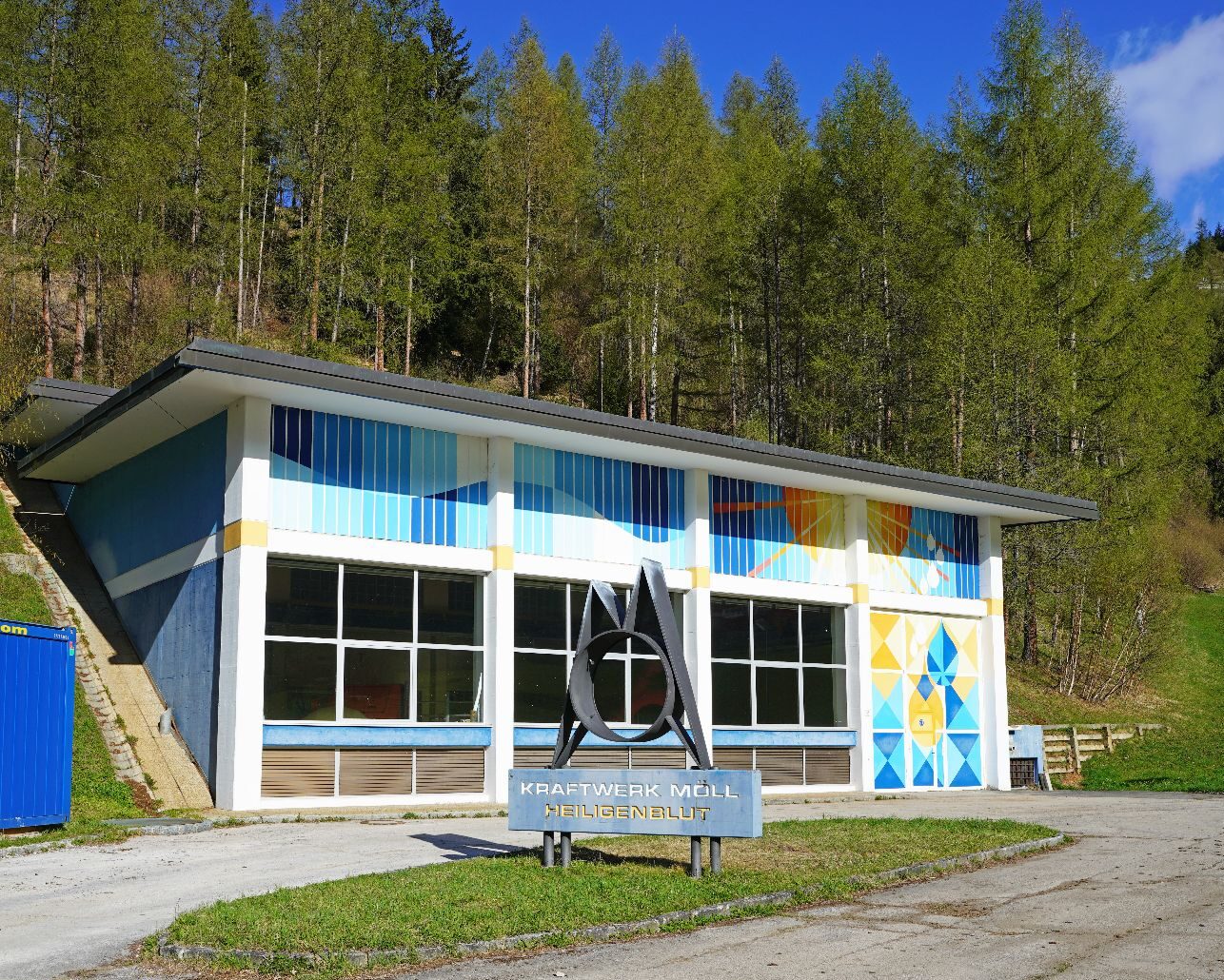
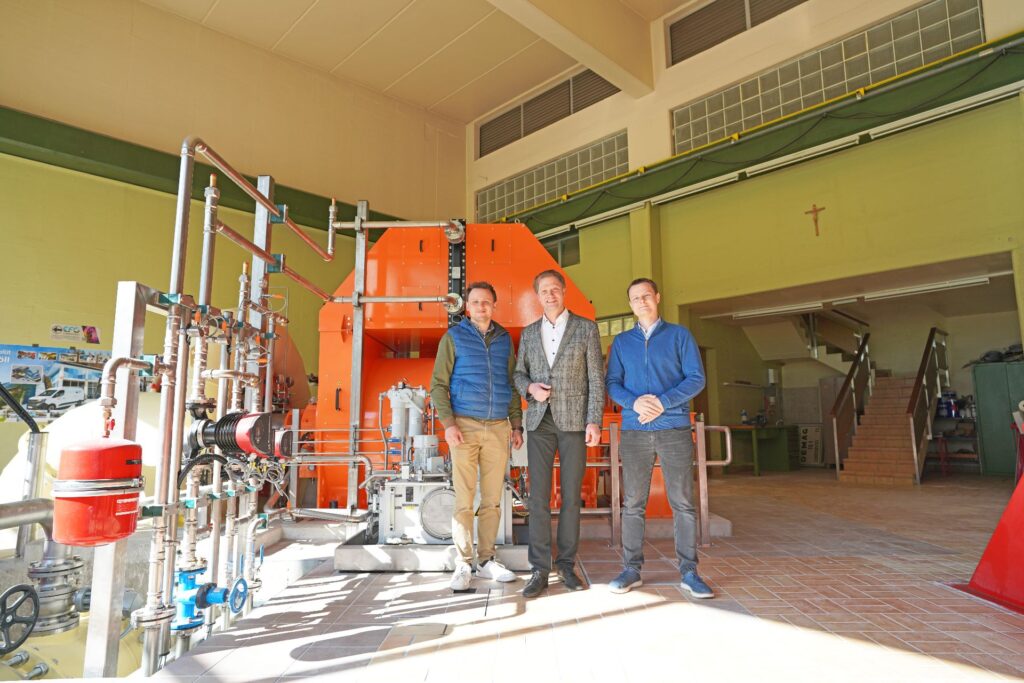
The Möll power station has been supplying Heiligenblut village at the foot of the Großglockner with electricity for around 43 years – powerfully and reliably – furthermore guaranteeing the village famous for alpinism a degree of energy self-sufficiency. However, this time had taken its toll on the Francis turbine. It was now due to be replaced, along with the shut-off valve and the generator. Together with the established industry companies EFG, responsible for turbine technology, and Hitzinger as the generator supplier, an exemplary refurbishment was successfully achieved. The collaborative project was completed successfully mid-March this year after around six months of construction work.
© zek
Hydropower Secures Sustainable Energy Supply for Heiligenblut
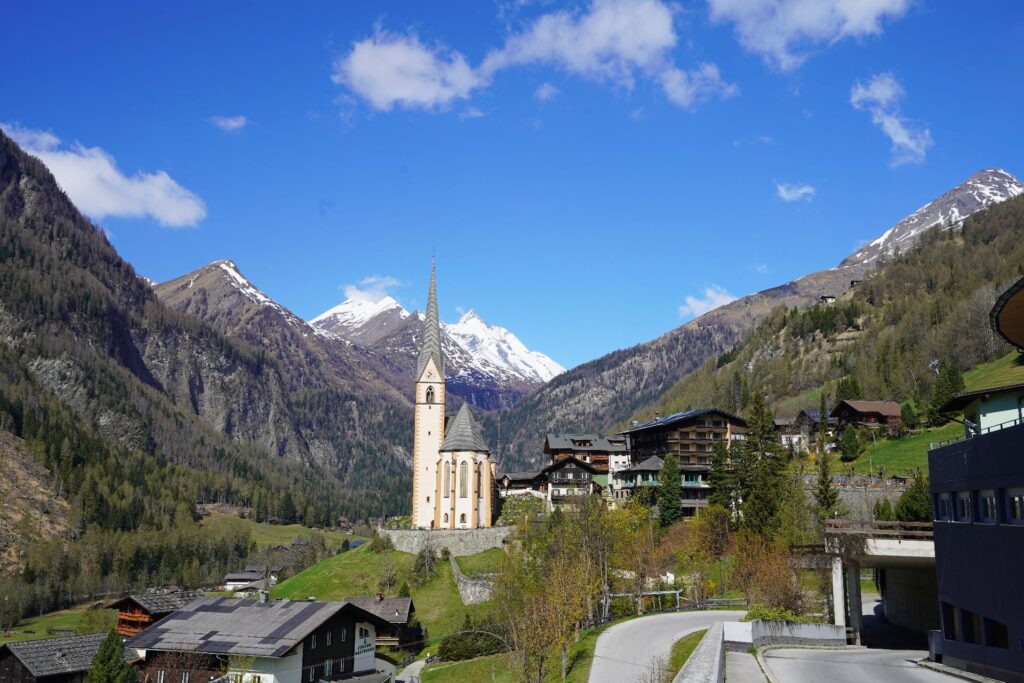
Heiligenblut in Carinthia is a celebrated mountaineering village. History books document it as the birthplace of one of Europe’s best-known nature reserves. In 1971, here, at the foot of the Großglockner mountain, the ground was prepared for the establishment of what later became Hohe Tauern National Park. It is now Austria’s oldest national park. Covering around 1,800 km², it’s also the largest in the entire Alpine region. The decision to emphasise the protection of the unique high-alpine landscape was taken early, and has had a lasting impact on the region’s identity. In fact, it continues to influence local political and economic developments to this day. Over the past decades, conscious management of natural resources has become a guiding principle in Heiligenblut, and has been reflected by a continuous focus on sustainability. So, in the context of this credo, it’s no wonder the use of renewable energy has always been given a high priority – one such example is the Möll power plant. Built between 1982 and 1983, the plant has been supplying the local population with clean electricity for over 40 years. The mayor of Heiligenblut, Martin Lackner, outlines the importance of the plant for the municipality: “Building our own hydropower plant was undoubtedly a milestone in the history of the town, as it has enabled us to achieve a degree of energy autonomy. We laid cables to all the municipal buildings and facilities – including the primary school, fire station, mountain rescue operation centres, offices, even our indoor swimming pool and several other of the town’s key buildings. This allows key parts of our community to draw on their own source of electricity, completely independently of the national grid. Should a large-scale power cut ever occur, Heiligenblut’s infrastructure will be supplied in island mode via our own power station.” On average, the local power station generates around 15 GWh per year, and anything not consumed directly by the town’s local infrastructure is fed into the national grid.
Two Turbine Technologies Ensure Reliable Power Generation
The original power plant was designed to utilise the gorge Möll waterfall between the districts of Zlapp and Pockhorn. A small dam was built at a naturally narrow section at the high end of the Möll Gorge and created a balancing reservoir with a holding capacity of around 12,000 m³. The adjacent headrace was fed via a tunnel of approximately 240 metres in length that leads into a water chamber. From here, an approximately 400-metre DN1200 underground penstock, consisting of steel pipes with a cement lining, serves as a conduit to the Pockhorn district powerhouse. Two different turbine configurations were installed in the power plant building to accommodate a total flow volume of 3.6m³/s. The larger turbine, machine 1, is a horizontal-axis Francis spiral turbine with a flow rate capacity of 2,400l/s – and a mechanical output of 2,300 kW. It’s flanked by a two-nozzle Pelton turbine, designed to cope with 1,200l/s and has a rated output of 1,150 kW. Essentially, both turbines had been left unaltered since they were originally commissioned in 1983 and, as Mayor Martin Lackner stated, the plant had always run stably and reliably, so there had been no reason to make any modifications.
© zek
Efficiency Losses Prompt Francis Turbine Replacement
This assessment was also shared by Gero Pretis (Dipl.-Ing.), the Technical Director of the Carinthian turbine specialists EFG, and who as project manager was largely responsible for machine refurbishment: “In principle, the existing combination of Francis and Pelton turbines made sense and had proven itself for decades. They formed the basis for stable efficiency levels throughout the year.” However, after four decades of operation the Francis turbine had been showing signs of wear and was no longer operating optimally. According to the expert from EFG, this comes as no surprise given the inherent design characteristics of this type of turbine.
Ultimately, this finding was the product of a comprehensive survey of the power station’s current condition, carried out by the Carinthian energy provider Kelag on behalf of the town. Kelag’s project manager, Dipl.-Ing. Sebastian Culetto, explained: “As a long-standing partner responsible for the plant’s operation to this day, we were the town’s first point of contact when the idea of plant modernisation arose in 2021. Subsequently, we carried out a comprehensive inspection of all components and issued a recommendation to replace the Francis turbine unit that was no longer working at optimum efficiency – but also suggested retaining the Pelton turbine unit as it was still in very good condition.” He then added: “We also believed it would make a lot of sense to replace all of the power station’s control and monitoring technology, not least because it would also enable the system to exploit various synergies.”
© EFG
Modern Two-Bearing Design Improves Machine Performance
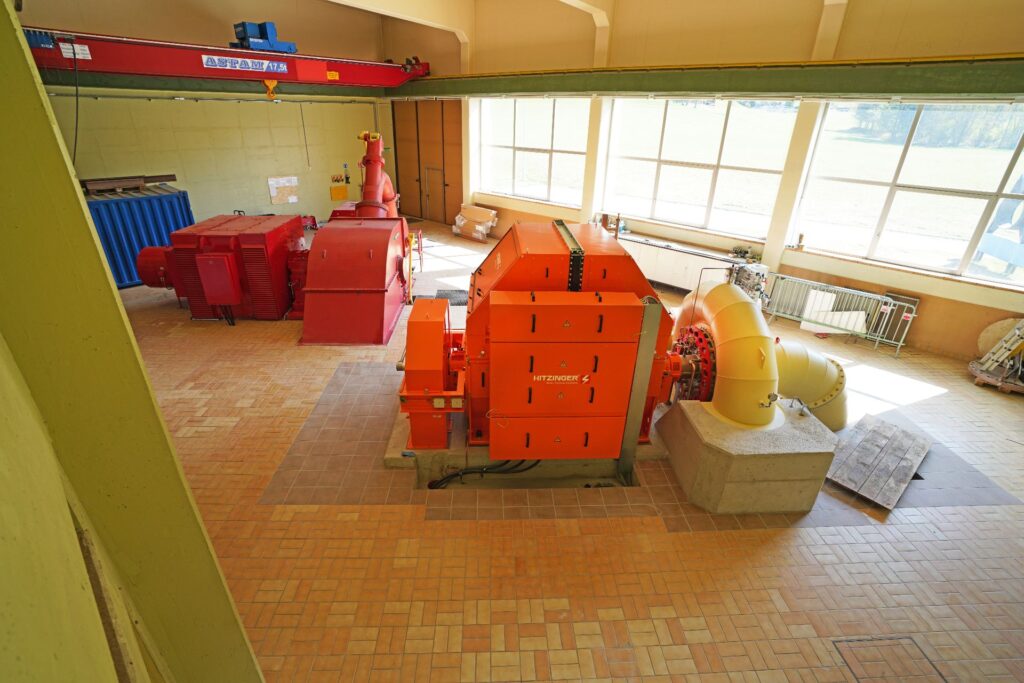
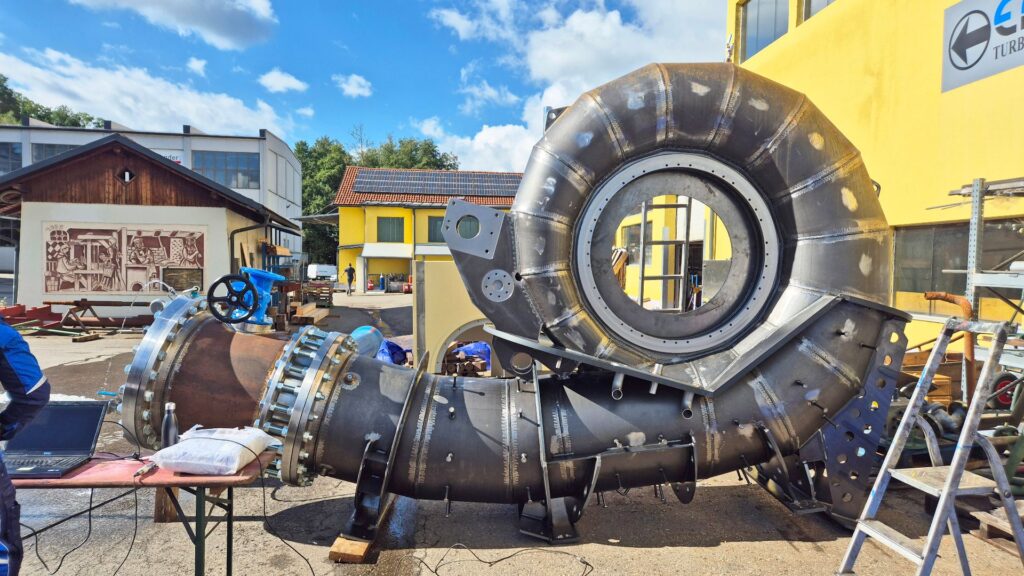
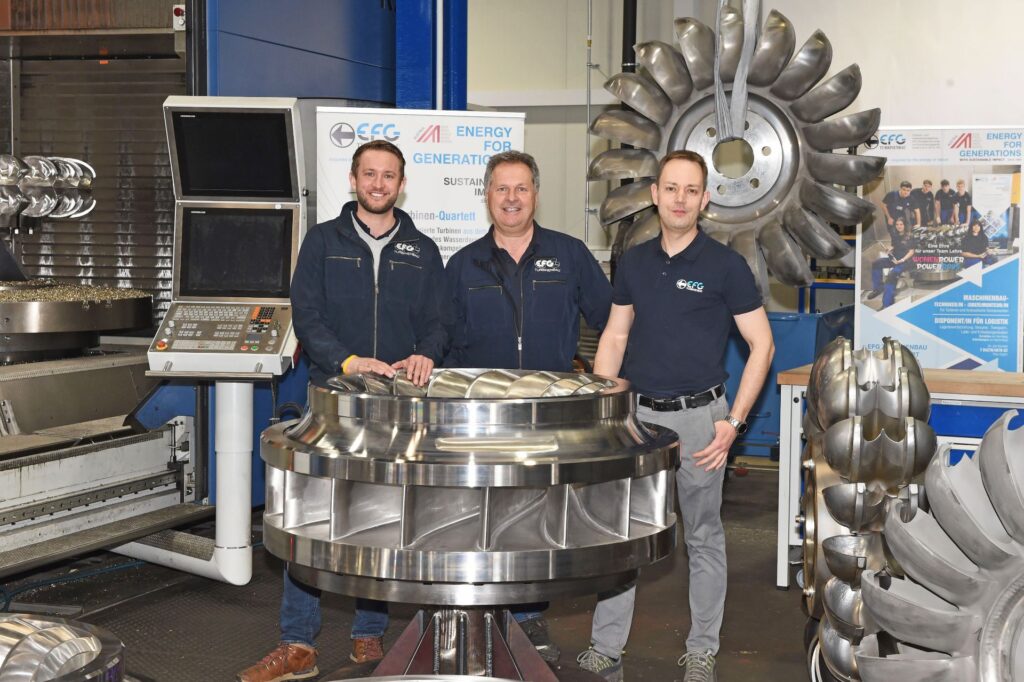
Although the expert engineers described the old set-up as robust and well-designed, it had been state of the art for another era. The previous design featured a four-bearing solution: two separate slide bearings for the turbine and flywheel, and two separate roller bearings for the generator. “Today’s designs allow for a modern and significantly more efficient two-bearing arrangement. In this case, with island operation in mind, a well-dimensioned rotation mass has been retained and moved to the rear of the generator. The generator bearing arrangement for the new machine was designed to let its slide bearings absorb rotor and turbine forces, and the forces from the inertia mass,” as turbine specialist Gero Pretis explains, pointing out that the guidelines for the new machine set-up were based on the high power utility standards set out in Kelag’s tenders. The experienced turbine builders at EFG were required to guarantee a high level of engineering expertise when designing the new Francis spiral turbine. EFG was awarded the contract as the general contractor responsible for replacement of the full machine set, the generator and the shut-off valve.
© zek
Retrofitting an Existing Hydropower Plant Requires Engineering Expertise
The real challenge replacing machinery in an existing plant poses itself long before actual work commences. As Gero Pretis summarises: “The biggest hurdle in refurbishment projects is the lack of freedom to choose.” Unlike with a new construction, there is no blank sheet of paper. Instead, there is tight bodice of predefined constraints. The power plant floor height determines the installation level of the machine as the conduit supply line is at a fixed elevation, as is the water level. It’s a complex hydraulic environment into which a new turbine must be fitted. In this specific case there was a suction height of almost 4 metres, which obviously had to be taken into account in the planning as it posed a significant cavitation issue.
In such situations a manufacturer doesn’t get to design the very best machine for ideal conditions – it’s simply the best possible solution within tight constraints, as Pretis confirms: “I can’t change everything,” which is why finding a solution is so difficult. Moreover, retrofitting into an existing structure demands extreme creativity and many years of experience right from the very beginning of a project. Performance issues, even the warranty questions, depend on conditions that cannot be altered, so the integration of a modern turbine into an existing structure will always involve compromises – technical, hydraulic and economic.
High efficiency and extreme durability
Obviously, seen in detail it wasn’t just a question of replacing the machinery with identical items. It was also important to incorporate the developmental benefits of the previous 40 years – and robustness was one of the key factors. EFG’s design engineer explains: “We looked very closely at the old machine’s wear patterns and asked ourselves what we could do better.” The response was to coat the heavily stressed slots on the stainless steel runner with an additional layer of tungsten carbide in order to minimise wear. Efficiency was, of course, at the very top of the priority list. Indeed, “High efficiency and durability are not mutually exclusive,” as Gero Pretis confirms. The result of the optimisation process was outstanding peak efficiency combined with stable and long-lasting operation.
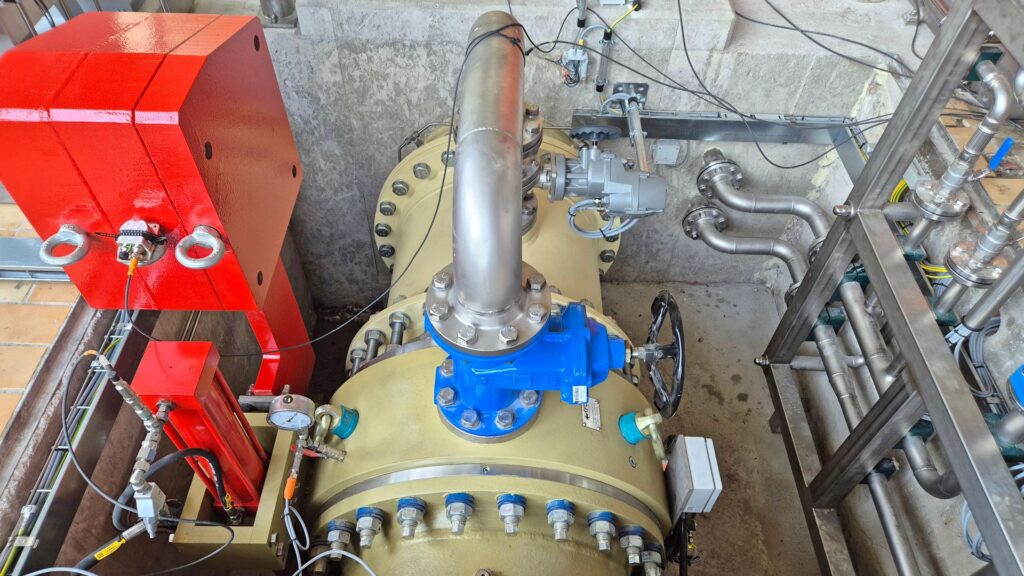
The installation of a new butterfly valve (DN800 PN16) provided the engineers at EFG with the much-needed scope to optimise the machine. The in-house EFG-designed valve is around 30 % shorter than similar conventional components. The installation space gained enabled the designers to devise a more hydraulically efficient turbine; a major advantage within the tight constraints of the existing plant – and a solution which significantly raised operational reliability. The new shut-off valve facilitates reliable emergency shutdown, even when water flow volume is at the maximum.
© zek
Hydraulic Simulations Ensure Stable Plant Operation
A key component of the overall project was an analysis of the entire headwater penstock system. This was carried out via numerical simulation. “The question was – how does the new turbine, with its operating characteristics, affect the headwater penstock infrastructure?” states Gero Pretis, who pointed out that the water conduit system at the Möll power station was more complex than at many comparable plants. Here it comprises a tunnel, a surge tank and a penstock – and two different types of turbine for a sensitive hydraulic system overall. The new turbine can adjust its output very quickly, and can regulate from 0 to 100 % in 15 seconds. This responsiveness is a prerequisite for island operation – one of the plant’s specific capabilities. In other words, if necessary, the power plant can be operated independently of the public power grid and maintain the frequency autonomously within a range of approximately 48 to 52 hertz – a capacity that is certainly not a given in this power class. Indeed, this is precisely the critical concern the experts raised, as rapid load changes generate pressure fluctuations along the water conduit and manifest themselves all the way to the surge tank. In extreme cases, this can lead to dangerous oscillatory movements. “If a surge tank that overflows is not built to handle the volume, there can be a disaster,” the mechanical engineer from EFG explained. For this reason, calculations were made to ensure in advance that no unstable conditions could arise, even at maximum closing and adjustment speeds. The findings were then incorporated into the actual control parameters.
Lower moment of inertia – higher control dynamics
The mechanical inertia of the machine also played a central role, not least since the conversion from a 4-bearing to a 2-bearing solution, and the mounting of a new generator, altered the possibilities for incorporating flywheel mass. In collaboration with the vastly experienced generator manufacturers at Hitzinger, and in consultation with Kelag, the team explored how much moment of inertia was technically feasible and permissible. This has direct relevance for grid stability in island operation, as greater inertia means more frequency stability – but also places higher loads on the machine. Gero Pretis: “Ultimately, a decision was made to strike a balance to generate slightly less inertia than in the old unit, but guarantee faster controllability with sufficient stability for island operation.”
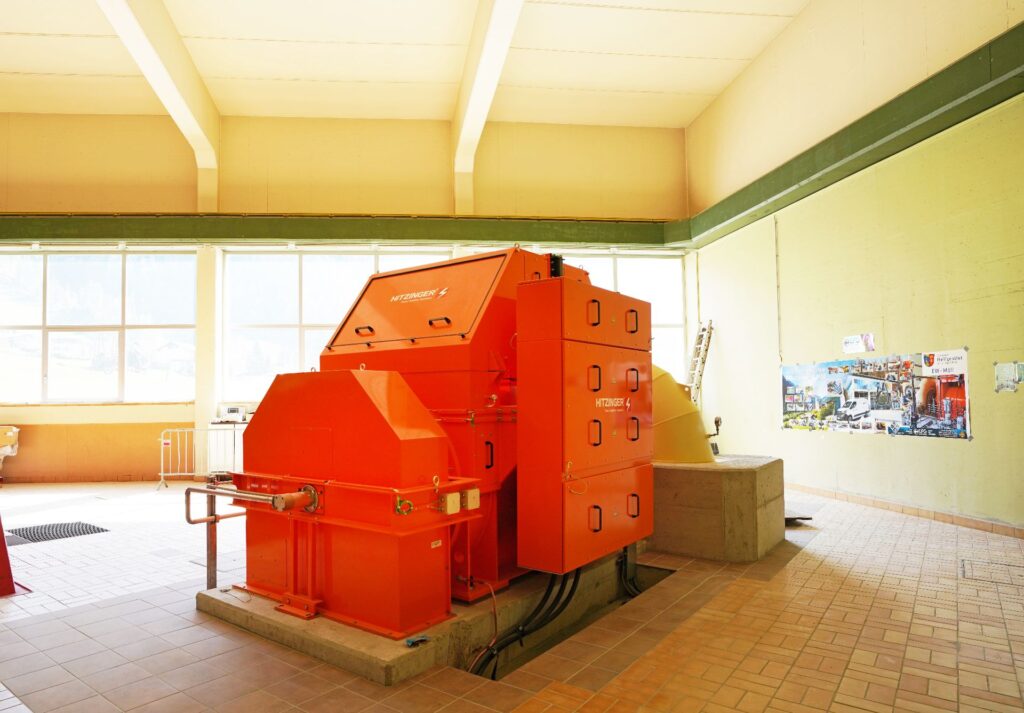
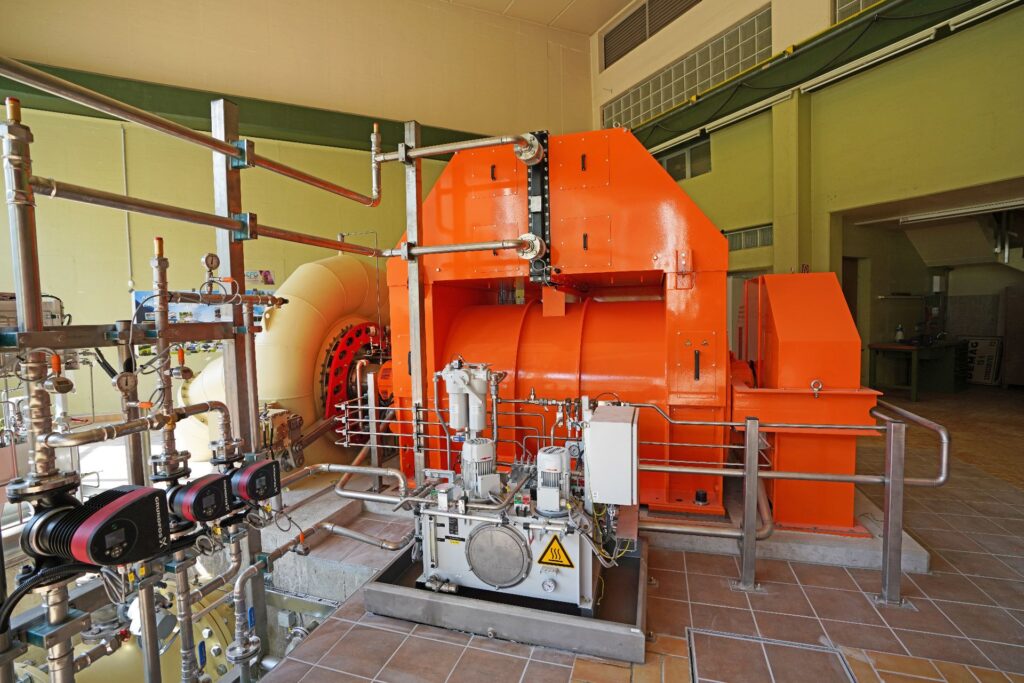
The experienced generator manufacturers were charged with designing a solution for the essential requirement of island operation, and also required to cover several other demands placed on a machine tailor-made for use at the site. One issue was the need to handle a 10 % overload capacity. A generally conservative design was required to ensure the thermal load on the machine remained low at all times. Whereas the previous set-up featured a partially open cooling system, the new machine now incorporates a closed state-of-the-art cooling circuit with a heat exchanger situated in the tailwater.
© EFG
Custom Generator Delivers High Efficiency and Reliability
A basis for the high adaptability and design flexibility of Hitzinger’s machines is their highly specialised proprietary calculation software, used to calculate every individual mechanical and electrical aspect of each machine. The system processes a multitude of parameters, algorithms and exclusion criteria very rapidly to deliver concrete, technically-sound design specifications. This way, despite tight constraints, it was possible to tailor the generator precisely to the Möll power station’s specific requirements.
Good material selection is essential for guaranteeing superior generator quality. Hitzinger only uses fully temperature-resistant steel grades and coatings to ensure high-level operational reliability. The superior quality of Hitzinger’s electrical steel sheets is well documented, and plays a central role with a significant influence on electrical losses that directly affect the generator’s efficiency. From a technical standpoint the resultant machine is a perfect fit that also performs impressively in operation. The Möll power plant generator achieves excellent efficiency levels, and contributes significantly to the plant’s overall efficiency. Equally remarkable is the fact that the machine runs smoothly and operates almost silently – even under high loads.
© zek
Machine 2 continues production during conversion
From the very beginning the question of how to keep the second turbine at the plant running reliably during extensive construction work on Machine 1 was discussed with a view to ensuring maximum supply availability and minimal production loss. The solution hinged on two main issues: Firstly, there was the question of potential vibrations caused by heavy construction machinery. Sebastian Culetto, the Kelag project manager, was pleased to report: “A temporary vibration monitoring system was installed to monitor any potential impact on Machine 2. The results clearly showed that the power station foundations were so solid, even the use of an excavator weighing several tons had no measurable effect on the neighbouring machine.” The second major issue was the dust generated by rock cutting and construction work. The Pelton turbine generator is still air-cooled, so the risk of dirt particles entering the machine was very real. As a countermeasure, Machine 2 was fully sealed off.
Ensuring continued operation for Machine 2 was comparatively straightforward under these conditions, and this was certainly aided by the plant’s configuration – as machine designer Gero Pretis emphasises: “The two turbines use separate tailraces enabling the Francis turbine’s water conduit to be taken out of service very exactly – while the Pelton turbine continued running largely undisturbed.” Overall, downtime was limited to less than two weeks.
© C. Theny
Project completion two weeks ahead of schedule
Technical implementation of the turbine replacement proved to be a scheduling masterclass. Work began with a comprehensive analysis of the condition of the plant as it stood. In 2021, the results were used to draw up a study of variants. As Sebastian Culetto outlines: “Our aim was to implement the project as efficiently as possible, which is why we spent over a year and a half preparing and planning the project down to the last detail.” The effort paid off. Following detailed planning and tendering in 2024, the refurbishment works at the power plant commenced. Subsequently, conversion work began at the power station at the end of October 2025, and successful recommissioning of the plant in March 2026 marked the end of the project. For the local authorities, Kelag’s involvement was decisive in ensuring its success. The project deliberately relied on Kelag’s extensive experience in tendering and the refurbishment of hydroelectric power stations. The entire procurement process was conducted in accordance with criteria tried-and-tested by Kelag to ensure activity was structured, transparent and operations ran smoothly.
The mayor, Martin Lackner, was delighted that all deadlines were met with no delays whatsoever: “Actually, the excellent cooperation between all the companies involved and the smooth running of project management enabled the project to be completed around two weeks ahead of schedule.”
© zek
Modernised Hydropower Plant Strengthens Heiligenblut’s Energy Independence
Mayor Lackner expressed his gratitude to the local council and executive members who backed the two-million-euro project with great conviction and resolve: “I am grateful we were able to agree on a consistent approach. The focus was never on finding the cheapest solution. Instead we aimed for the best and most sustainable answer for the future.” He praised the companies contracted to work on the project for their impressive contributions, above all EFG and Hitzinger, whose great commitment and high-quality work were key to the project’s success. Martin Lackner stated: “The plant meets the very latest standards and was built entirely by local firms – something that makes me particularly proud.”
As a village at the foot of the Großglockner, one widely acknowledged in the world of alpinism, the importance of the Möll power station cannot be overstated for Heiligenblut, as Mayor Lackner again confirms: “Apart from the secure electricity supply and resilience to blackouts, we save a lot of money by generating our own electricity and having our own grid. This gives us much-needed breathing space in terms of the municipal budget. Having such financial leeway opens up opportunities most other municipalities do not have. For example, funding our indoor swimming pool would not be possible without the revenue from the power plant.” Investment in the hydroelectric power station is a further reflection of the municipality’s constant pursuit of sustainability. Further evidence for this is provided by the town of Heiligenblut which has now been subjecting projects to the ‘e5 municipalities’ certification process – recognised in the whole of Europe – for several years. Work is currently underway to gain the fourth “e” by implementing a variety of energy efficiency measures. The success of the town’s power station modernisation project is also to be showcased on an open day planned for the coming weeks – featuring the companies involved, and welcoming the general public and representatives from the regional government.