Austrian Hydropower Technology for the Dupinga Hydropower Plant in the Philippines
Bild: © GUGLER
With the startup of power station Dupinga in February 2026, GUGLER Water Turbines GmbH was able to celebrate the successful completion of yet another project in the western Pacific island state. For the Austrian hydropower specialists, who have already implemented more than 15 projects throughout the country, the inauguration of the Dupinga facility represents another important milestone in supporting the Philippine energy sector. With the project site tucked away in the remote parts of the provinces, the construction of the 4 km power descent posed a major challenge, causing multiple delays along the way. GUGLER was contracted to provide an all-inclusive hydro-electrical package for the power house, with two horizontally aligned Francis turbines as the core elements providing a maximum capacity of more than 4.7 MW. In a normal year, the new small-scale hydropower station on the Dupinga River will supply about 22 GWh of clean energy for the region.
© GUGLER
Dupinga Hydropower Plant on Luzon strengthens renewable energy in the Philippines
As far as meeting the energy requirements of the country’s 110 million inhabitants is concerned, fossil energy sources have been the traditional mainstay. As reported on the online portal “lowcarbonpower.com”, in 2024 around 78 per cent of electrical energy was generated by burning oil and gas. While renewables are lagging far behind in the statistics, the islands hold great potential for the utilisation of renewable energy sources. However, despite the country’s tradition of fossil-dominated energy generation, there is a growing trend towards the utilisation of renewables. As a result, recent years have seen a series of hydropower stations coming on the grid on the Philippine’s main island of Luzon.
© GUGLER
GUGLER supplies hydropower technology for the Dupinga Hydropower Plant
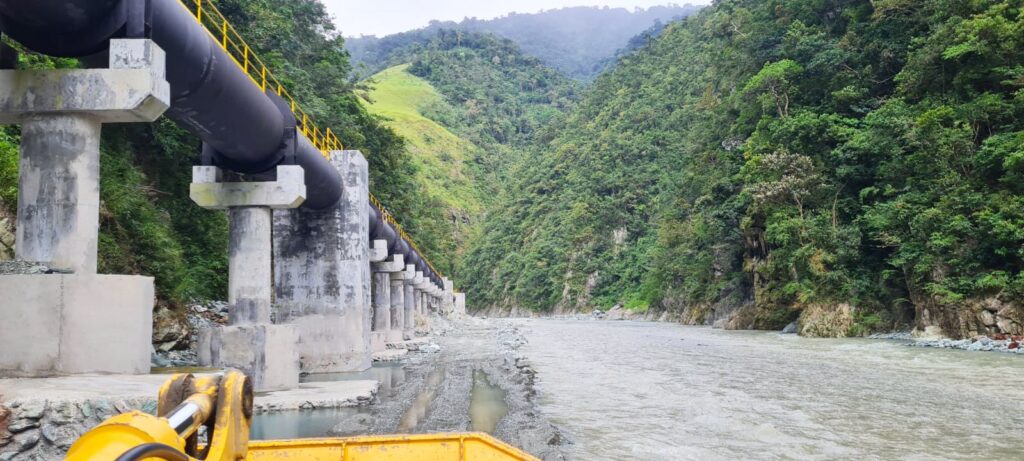
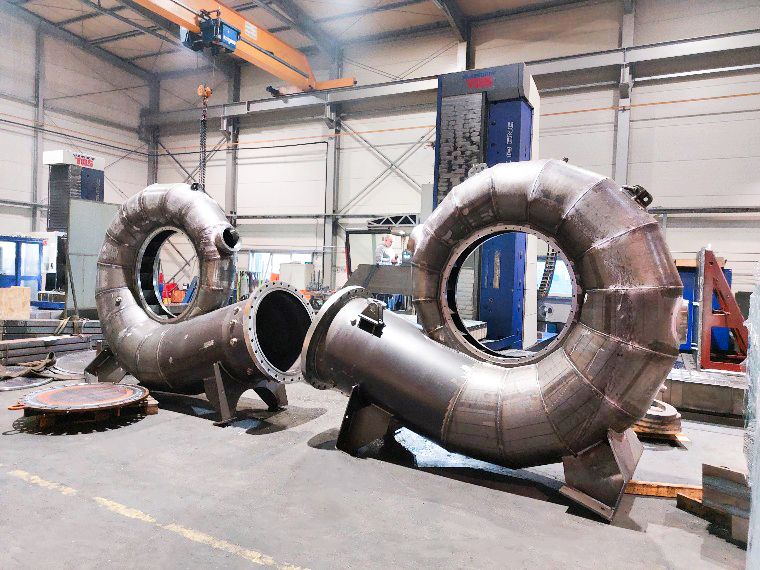
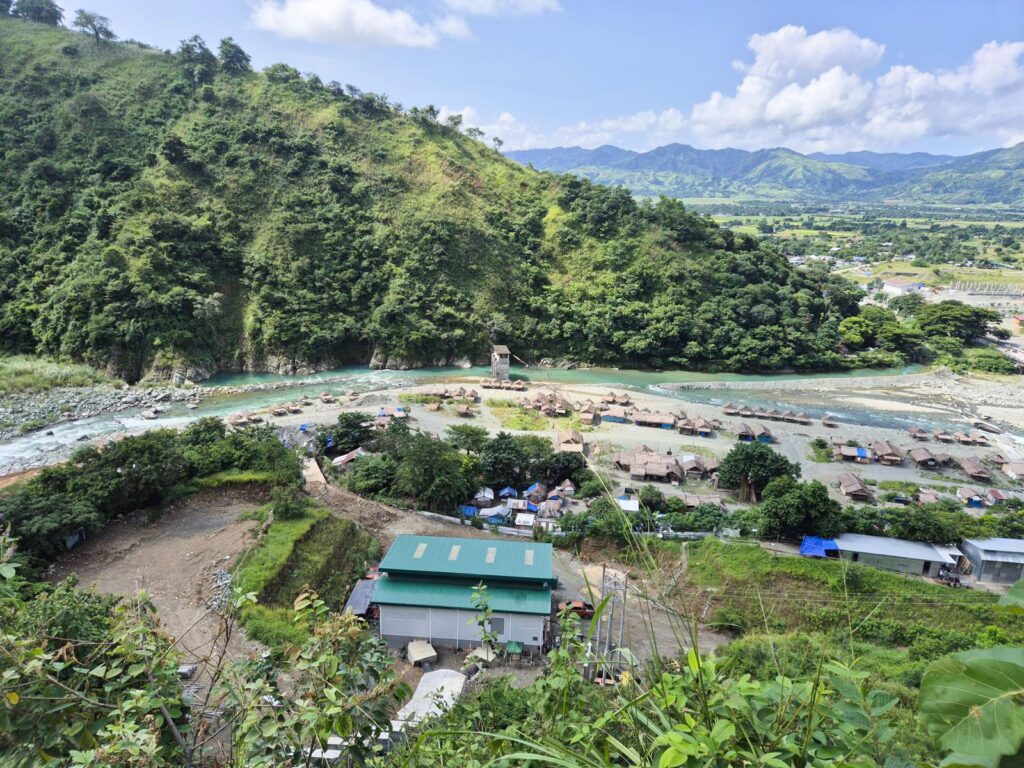
Austrian-based industry insider GUGLER Water Turbines GmbH can definitely attest to the ongoing expansion of hydropower in the Philippines. Highly regarded as a hydropower all-rounder in the Asian market, GUGLER has successfully completed more than 15 hydropower projects throughout the Philippines. The latest hydropower station to be equipped with GUGLER technology is owned and operated by local project developer Alternergy in the central region on the island of Luzon the province of Nueva Ecja. The facility utilises the hydroenergetic potential of the Dupinga River, with the motive water reaching the turbines in the power house via a 4 kilometre penstock that runs alongside the waterbody. As Alternergy are careful to point out, their project was planned in close cooperation with local communities and implemented with due consideration for the indigenous population and local ecosystem. Apart from the facility’s energy generating capacity, which covers about 15 per cent of the energy requirements of the surrounding towns and villages, Alternergy also emphasise the project’s economic benefits. For example, the project created a large number of jobs, and a part of the gross income from energy sales will immediately benefit the local communities. During the planning stage, a particular point of attention was the need to make the power station’s infrastructure as unobtrusive as possible, with the conduit routing following the natural hilly topography of the surrounding terrain. Before it reaches the power house, the penstock forks into two conduits to supply motive water to the two Francis turbines. The design for the Y-pipe was also provided by GUGLER and manufactured locally based on the Austrian engineers’ blueprints. Overall, the Austrian hydropower experts provided an all-inclusive project package that comprised the entire electro-mechanical and automation equipment. The control and protection systems were provided by the automation experts of GUGLER’s Austrian-based subsidiary, H&W Control GmbH, who were also responsible for programming the instrumentation and control systems. Another contributor to the project, GUGLER’s long-standing Philippine partner Petco Reenergy Corporation, was tasked with managing the connection of the power station to the grid.
© GUGLER
Challenging construction and logistics on the Dupinga River
As GUGLER’s project leader, Stefan Falkner, points out, the manufacturing process for the penstock was accompanied by a series of challenges that kept delaying the overall project. “Our machine units would have been ready for delivery back in late 2022. But then we ran into on-site construction issues, and we had to keep them in temporary storage in Europe and in the Philippines for quite some time. Then, in the autumn of 2024, we were finally ready to go ahead with the installation, and after that the inauguration in February 2026. We had to take extra measures to prevent pressure bruises on the anti-friction bearings in the machines while they were in storage. We were able to get to the rotors through an opening in the shipping container. That allowed us to rotate them by hand every few months – no need to do anything else,” as Stefan Falkner explains. The pictures of the difficult terrain along the penstock show the reason why the construction work took so much time and effort to complete. Before it reaches the water chamber and the adjoining silt basin, the power descent structure follows a lengthy stretch of concrete conduit, which feeds into a steel pipe supported by solid concrete pillars. Following the fragmented bank line, the route crosses the river at some point and includes multiple high and low points. Complicating things further, the construction process was marked by frequent landslides and logistic challenges, which led to delays in the overall construction and project schedule.
© GUGLER
Two Francis turbines deliver more than 4.7 MW of installed capacity
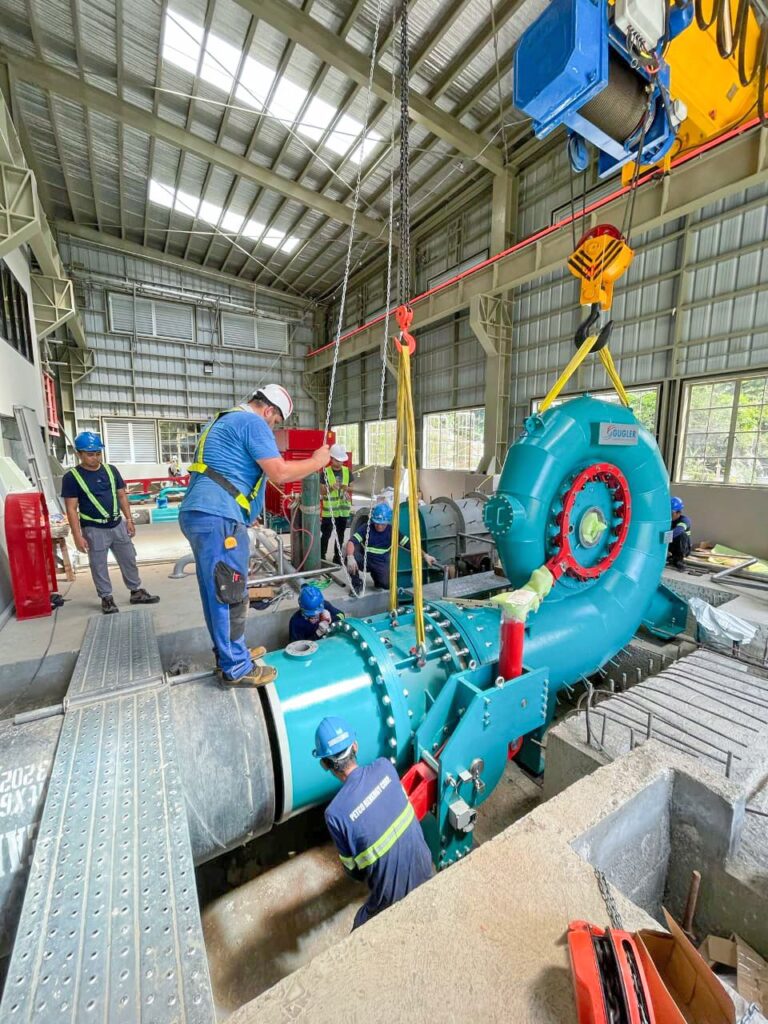
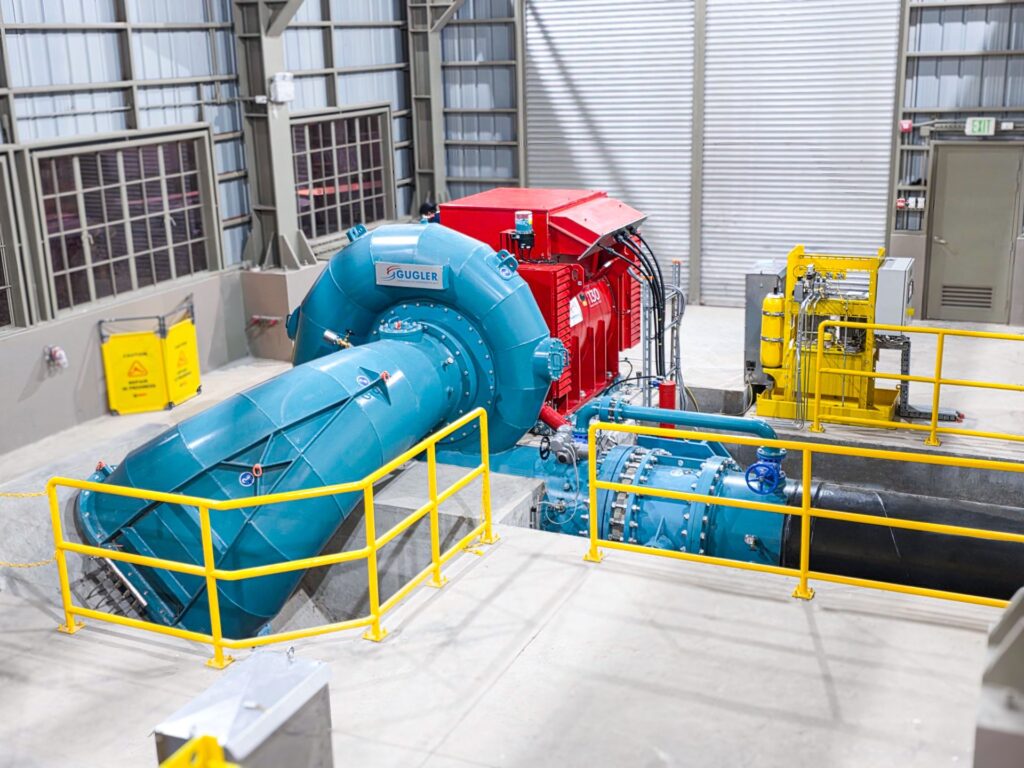
The two horizontally aligned Francis spiral turbines were each designed for a flow rate of 4.33 m³/s and a net head of 60.7 m, which allows them to achieve a rated capacity of 2,364 kW at maximum water supply. The machine units are equipped with air-cooled synchronous generators that are direct-coupled to the turbine rotors. Thanks to the low sediment content in the motive water, there was no need for any additional protective coating on the Francis rotors, which measure 770 mm in diameter. GUGLER also provided the main isolating valves for the turbines, along with the hydraulic aggregates and the medium-voltage switchgear. While the construction phase had been marked by numerous challenges, the installation and inauguration of the machine units went ahead without a hitch. After the initial dry runs last December, the full inauguration was celebrated in February 2026. “The long-term storage didn’t do the machines any harm, and we were able to start them up, test them under full load and gain some valuable hands-on experience without any problems.”
© GUGLER
Dupinga Hydropower Plant generates 22 GWh of renewable electricity
Now, a few months after the inauguration, project leader Stefan Falkner can give an overall positive summary of the completed project, emphasising the excellent collaboration with Alternergy. “Despite all the delays, we were able to complete the project professionally and successfully. The communication and interaction between the project partners and customers was marked by mutual appreciation throughout, and that made for a very comfortable working atmosphere.” GUGLER’s engineers are similarly pleased to have been able to contribute to the Philippine’s envisioned transition to sustainable energy production. The standard capacity of the new eco-power station that benefits an entire region is rated at more than 22 GWh.