
Modular StreamDiver concept at Norway’s Kilandsfoss Hydropower Plant
Bild: © Voith
In southern Norway, around 20 kilometers north of Arendal in the Agder region, the newly built Kilandsfoss hydropower plant is nearing commissioning. The plant was designed in harmony with the river landscape of the Nidelva, the technical site conditions, and environmentally compatible use requirements. The commissioning phase started in April 2026, with a wet test run scheduled for June 2026. With a focus on ecological responsibility, regional value creation, and technical precision, Voith, ELIN, and Sintaksa, together with the customer Arendals Fossekompani ASA, are realizing a plant based on a modular StreamDiver concept for low-head, high-flow conditions.
© Voith
Kilandsfoss Hydropower Plant: A Modular Low-Head Hydropower Concept
Originating in the inland region of southern Norway, the Nidelva is the main river of the Arendal catchment area, flowing through the Agder region before emptying into the Skagerrak near Arendal. A total of 16 hydropower plants have been built along the more than 200-kilometer-long course, making the river system one of the most intensively used waterways for energy generation in southern Norway today. The low head, high flow rates, and integration into an existing hydropower cascade along the Nidelva place special demands on the technical design of the plant.
With this background, a new hydropower project is being developed at the Kilandsfoss site through the project company Kilandsfoss AS, in which the municipalities of Froland and Åmli are taking part together with Arendals Fossekompani ASA. The project combines energy-sector expertise with regional responsibility, helping to anchor hydropower in the region over the long term.
At the same time, the plant concept deliberately accounts for existing recreational uses at the site. One example is the implementation of a dedicated kayak course: the waterfall, which had previously not been used for energy generation, was intensively used by local kayakers and was integrated into the plant concept at an early stage as a separate route.
© Voith
Modular StreamDiver concept replaces conventional turbine layout
The Kilandsfoss project is being implemented in close collaboration between the operator Arendals Fossekompani ASA and the participating project partners. Contact with Voith was set up through Voith Hydro Oslo, which had already supported the operator in earlier projects in Norway. Project development for Kilandsfoss extended over several years and was shaped by a fundamental conceptual adjustment. A first tender based on a conventional layout with two vertical Kaplan turbines had already been published in 2018 but was later cancelled due to the economic framework conditions. A renewed tender in 2022 also yielded no economically feasible outcome.
Already at this early stage, the StreamDiver concept was introduced into the discussion as an alternative solution and further developed together with the operator. On this basis, the current plant layout with eight modular units was ultimately created, specifically tailored to the site conditions of the Nidelva. The lean modular concept reduces civil construction efforts, adapts flexibly to the discharge characteristics of the Nidelva, and increases operational reliability.
The close collaboration between the operator, planners, and project partners enabled the revised concept to be developed into a permittable project within a comparatively short period of time.
„In Kilandsfoss, we saw very clearly where the economic leverage lies in low-head projects. It is not about reinventing the wheel, but about reducing complexity while keeping flexibility. That is exactly why we rely on standardized units that can be modularly adapted to the hydraulic conditions. From my point of view, that was the decisive step,” said Patrick Hebenstreit, Project Manager at Voith Austria.
© Voith
Installation and commissioning of the StreamDiver units
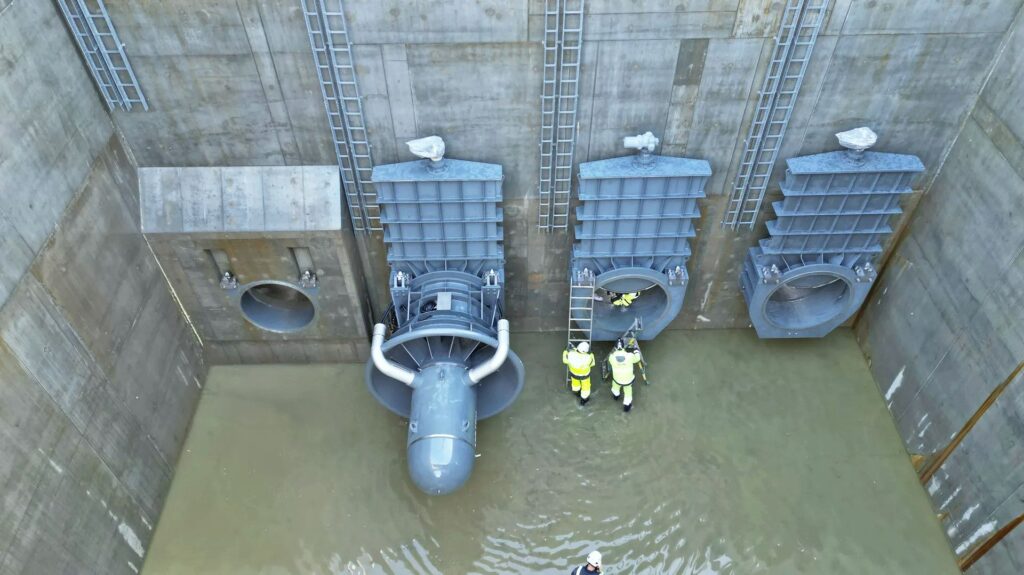
The project is based on the coordinated interaction of three specialized partners. Voith is supplying the turbines and shut-off devices and handling the plant’s mechanical integration. The permanent magnet generators are provided by ELIN, while Sintaksa is delivering the complete electrical package, including the high-voltage connection and frequency converter system.
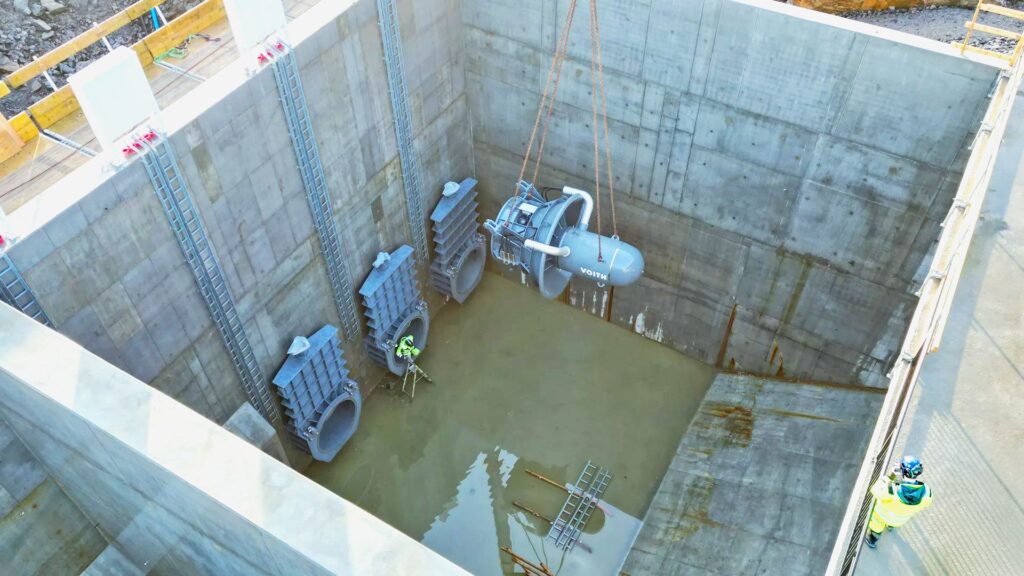
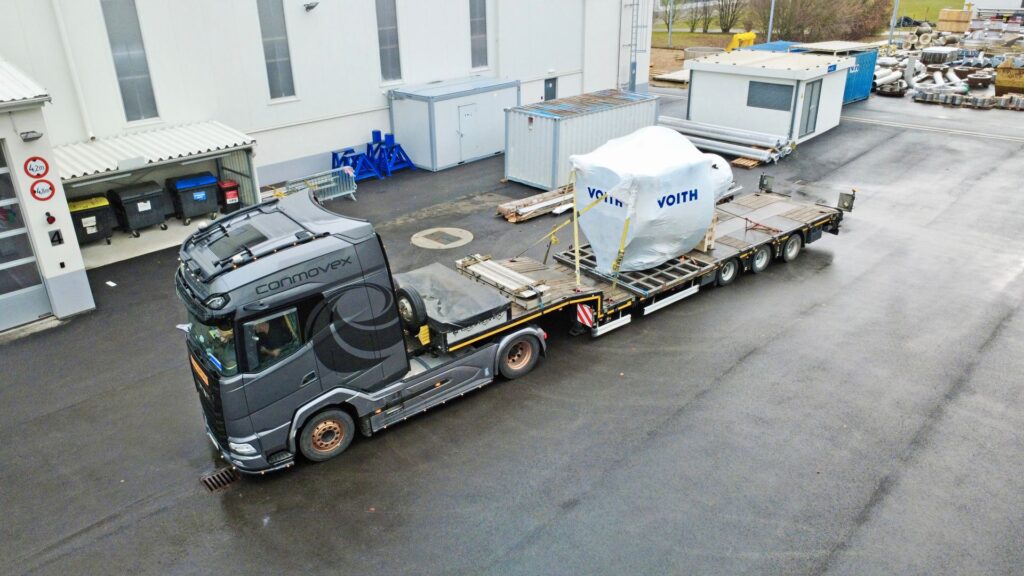
Delivery of the electromechanical components took place in several construction phases. Initial parts of the electrical installation were delivered in November 2025. The shut-off valves and StreamDiver units followed in December. The turbines were installed one after another directly from the transport vehicle into the prepared installation positions. With the units fully preassembled and tested, each machine could be installed in less than one day; the components only had to be lifted into place and prepared for commissioning.
Since February 2026, the second phase of the electrical installation has been underway, while the main transformer is expected to be integrated in April. With the start of commissioning, all systems are currently being tested in dry runs. The wet test run is scheduled for June 2026.
© Voith
Technical design of the Kilandsfoss StreamDiver hydropower plant
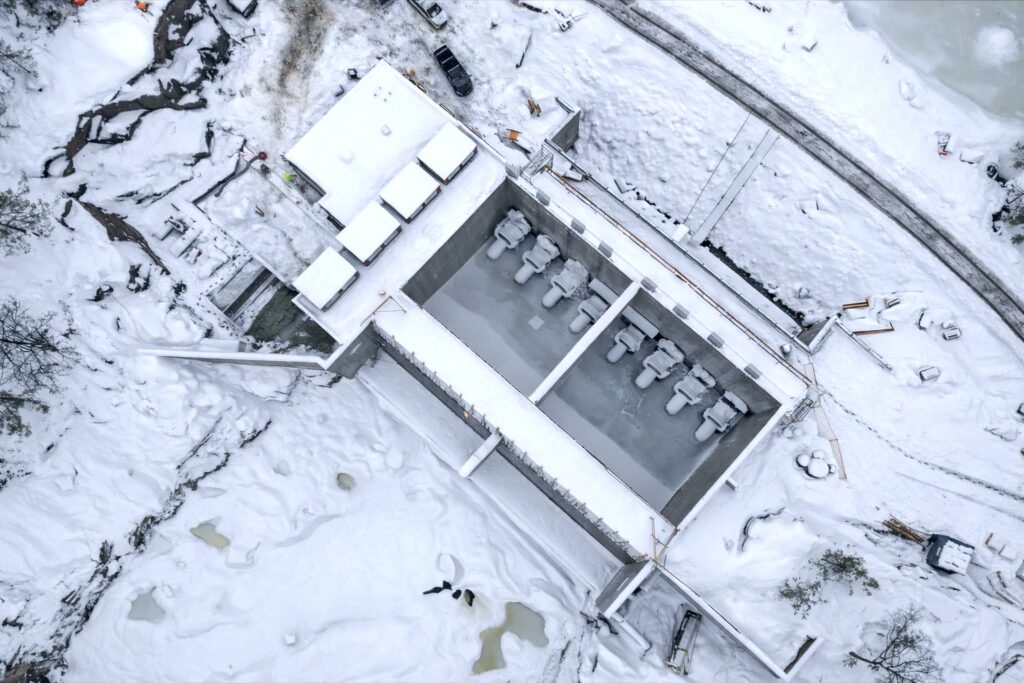
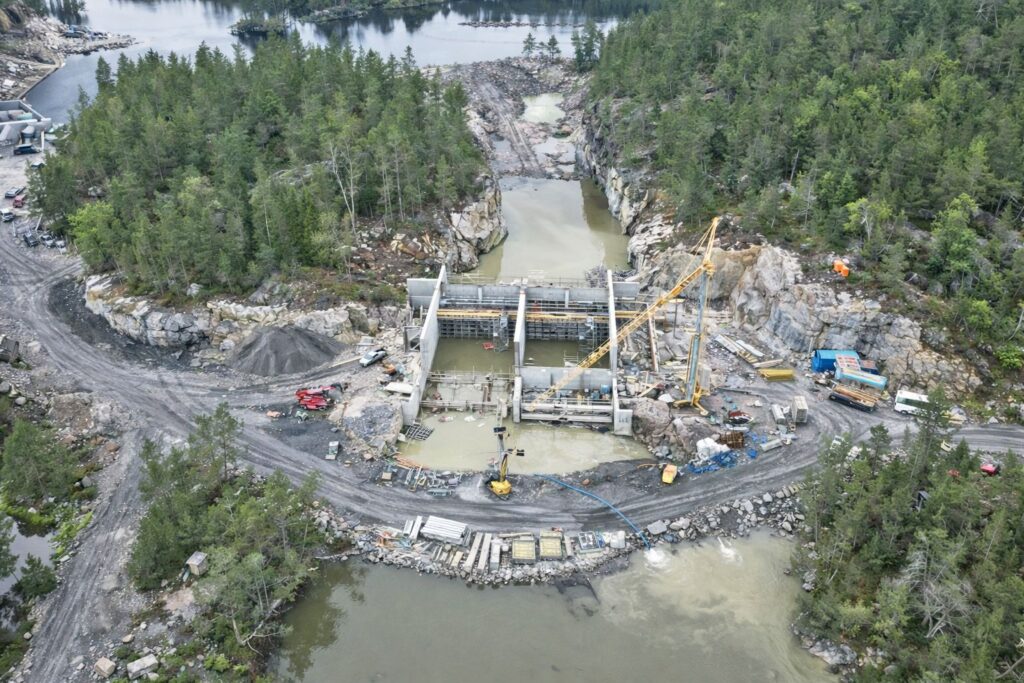
The hydrological characteristics of the Nidelva – high flow combined with low head – make the site ideally suited for the compact and fully submerged turbine units. The power plant is designed for a net head of 6.01 meters. With a total water flow of 135 m³/s, the plant concept is based on a modular multi-machine layout with eight StreamDiver units. The installation comprises six unregulated StreamDiver units of type SD-16.95, each with 17.73 m³/s and a directly coupled 913 kW permanent magnet generator, as well as two regulated StreamDiver units of type SD-14.90, each with 14.25 m³/s and a directly coupled 681 kW permanent magnet generator. While the six larger machines handle most of the flow, the two smaller, regulated units enable more precise adaptation to variable discharge conditions. The plant has an installed capacity of 6,84 MW electrical output.
Unlike conventional run-of-river hydropower plants with vertically installed turbines, Kilandsfoss uses a horizontal arrangement of the machines. This design enabled a significantly more compact civil structure and reduced the required concrete volume by around 40 % in this project. As a result, construction costs and construction time could be substantially reduced without compromising efficiency or operational reliability.
The maintenance-friendly StreamDiver turbines run with water-lubricated bearings and electrically actuated control components and require no oil or grease. This creates a closed system with minimized environmental risk and almost silent electricity generation through the fully submerged turbines. The generated electricity is fed entirely into the public grid of the regional grid operator Agder Energi Nett.
© Voith
Variable-speed StreamDiver technology improves efficiency at partial load
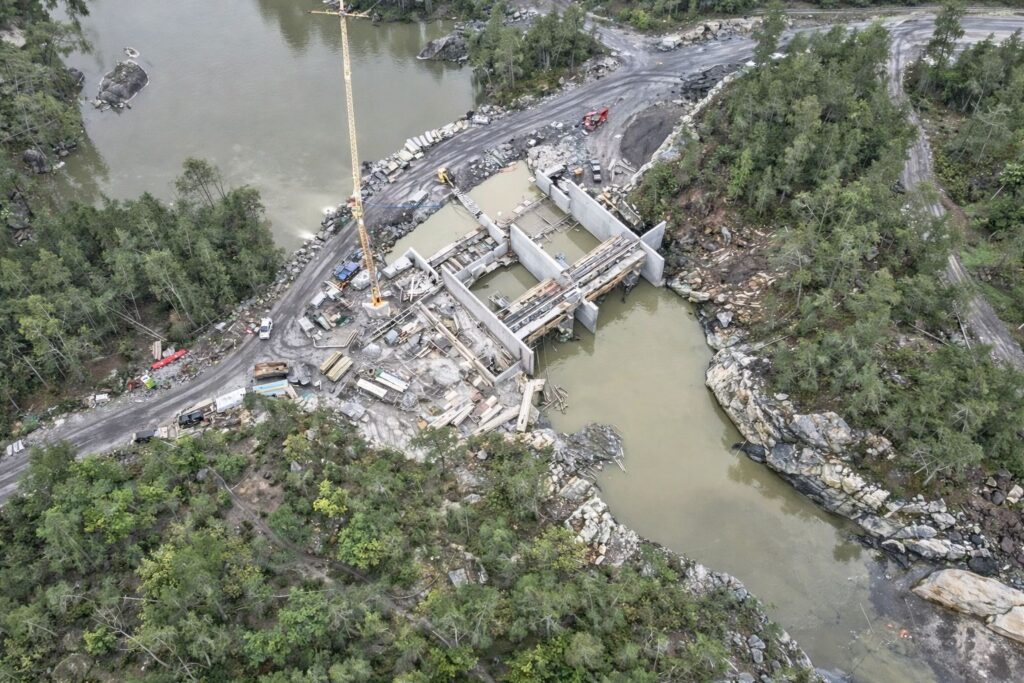
A specially configured converter system was implemented for the two smaller StreamDiver units, enabling power outputs of up to one megawatt at a DC link voltage of 1050 VDC. An integrated medium-voltage circuit breaker ensures safe shutdown if a fault occurs. In combination with the adjustable regulation mechanism, the variable-speed integration enables double-regulated operation. For defined wicket gate positions, the most efficient hydraulic speed can be set, improving efficiency, particularly at partial load. The two smaller machines therefore play a crucial role in the plant concept: they enable finest adaptation to fluctuating discharge conditions and, at the same time, expand the application range of StreamDiver technology in the low-head sector.
© Voith
Sustainable hydropower with environmental protection and kayak passage
At Kilandsfoss, sustainability is reflected not only in CO2-free operation, but also in structural measures to minimize environmental impacts during operation. Electric drives on the gates and regulation mechanism, as well as water-lubricated bearings, reduce the risk of lubricant spill and support water protection, while simultaneously simplifying maintenance and inspection.
The planning also considered the site’s role for the local community: for a local kayak club that had previously used the waterfall, which had not been used for energy generation, a dedicated kayak course was integrated into the overall planning. This ensures that the waterfall is still accessible to locals and visitors when the hydropower plant is commissioned.
© Voith
Kilandsfoss demonstrates the potential of modular low-head hydropower
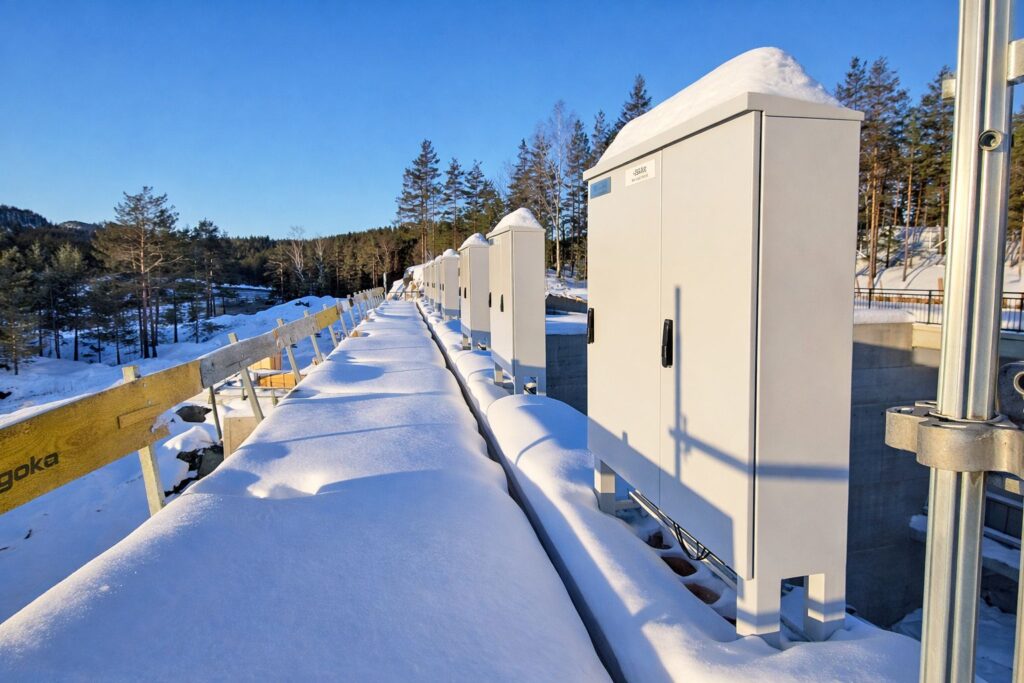
The conceptual realignment of the project required close coordination between planning, permitting, and technical implementation. Nevertheless, the delay at Kilandsfoss remained limited to only a few months. This was made possible by the solution-oriented collaboration between the operator, authorities, and project partners. At the same time, the project showed how important early planning, clearly coordinated interfaces, and open communication with the customer are – especially under winter conditions, where weather and snow loads must be considered.
Kilandsfoss also shows that modular StreamDiver layouts can provide a robust and practical solution for low-head sites, especially under challenging economic framework conditions. After all, low head sites, where civil structure volumes and machine sizes can quickly become major cost drivers, the multi-machine approach opens a new approach for technical design and economic viability.