Austrian hydraulic steel construction experts renovatebottom outlet of Bavarian World Heritage power plant
Bild: © Braun
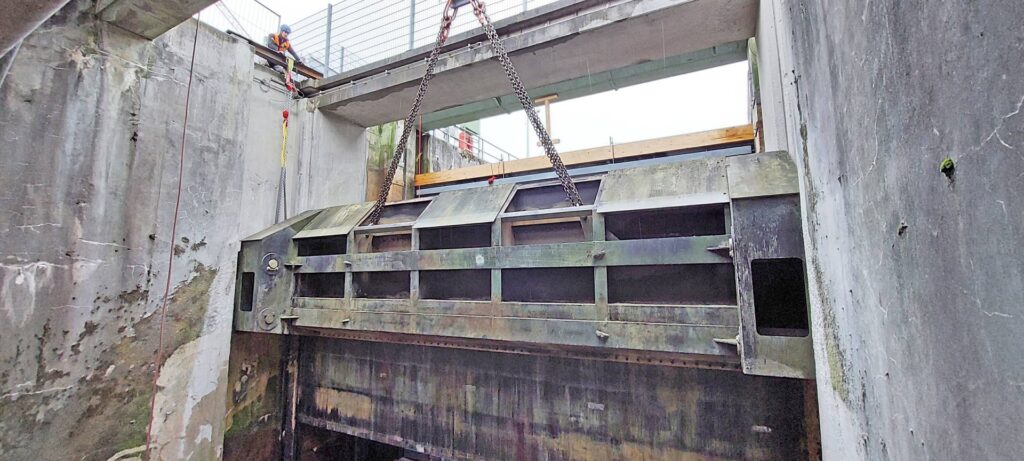
The refurbishment contract for the bottom outlet of the long-serving LEW power plant in Meitingen on the Lech Canal required the entire expertise of the experienced industry professionals at Braun Maschinenfabrik in Vöcklbabruck, Upper Austria. This certainly wasn’t an everyday job for the experienced hydraulic steel construction experts. It took around seven months to restore 100% functionality to the bottom outlet gate of the weir system. The renovated gate has been back in operation since April of this year, and is now working better than ever.
© Braun
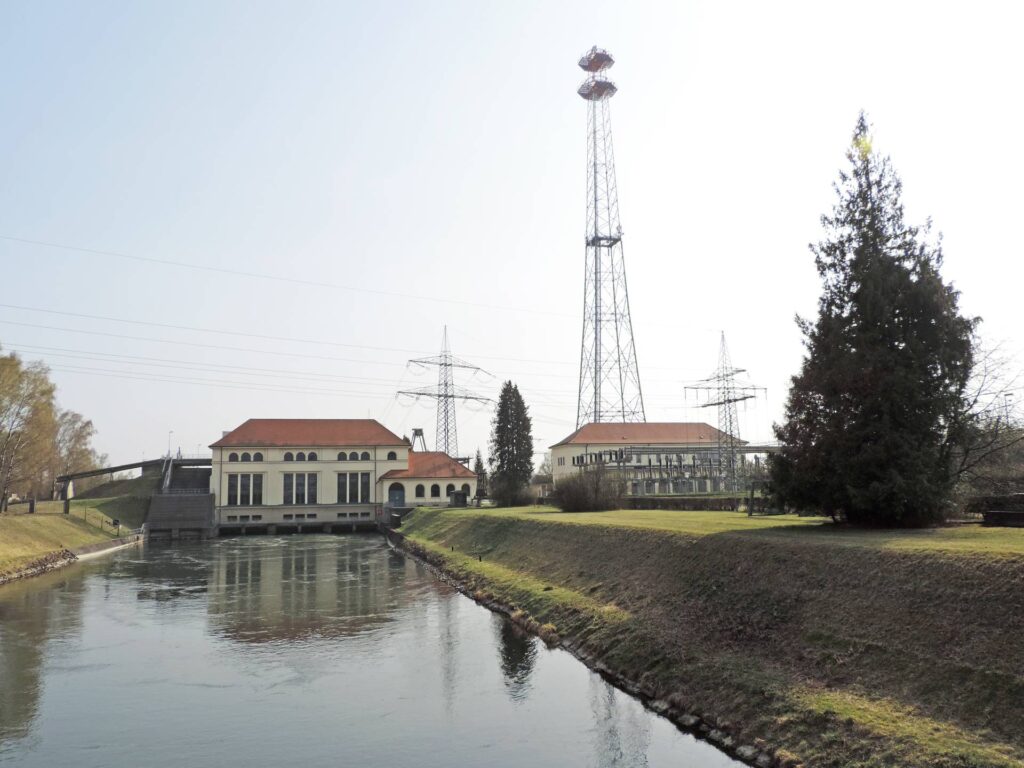
The Meitingen power plant on Bavaria’s Lech Canal in the district of Augsburg is much more than just a supplier of green electricity. Run by the Bavarian energy company LEW, the long-serving, conventionally-built hydropower plant is one of the company’s high-performance units – and an acknowledged UNESCO World Heritage Site within the ‘Augsburg Water Management System’. The power plant with three Francis twin turbines was originally commissioned by LEW back in 1922. Remarkably, although multiple upgrades and modernisation measures have been required down the years, the original machine group is still in operation today. The plant symbolises the transition from small businesses to industry, reflects the development of hydropower in the region, and is, hence, of great historical significance – which earned it a place on the World Heritage List.
© Braun
The consequences of severe corrosion
It’s no surprise that time has taken its toll on the components of this 100-year-old hydropower plant, so, of course, this has also applied to the weir infrastructure. Operational safety at the weir had been guaranteed, but the bottom outlet was now due for total refurbishment, which is why the operators at LEW turned to the Upper Austrian Braun Maschinenfabrik – renowned hydraulic steel construction experts with a long list of references in the field of weir refurbishment.
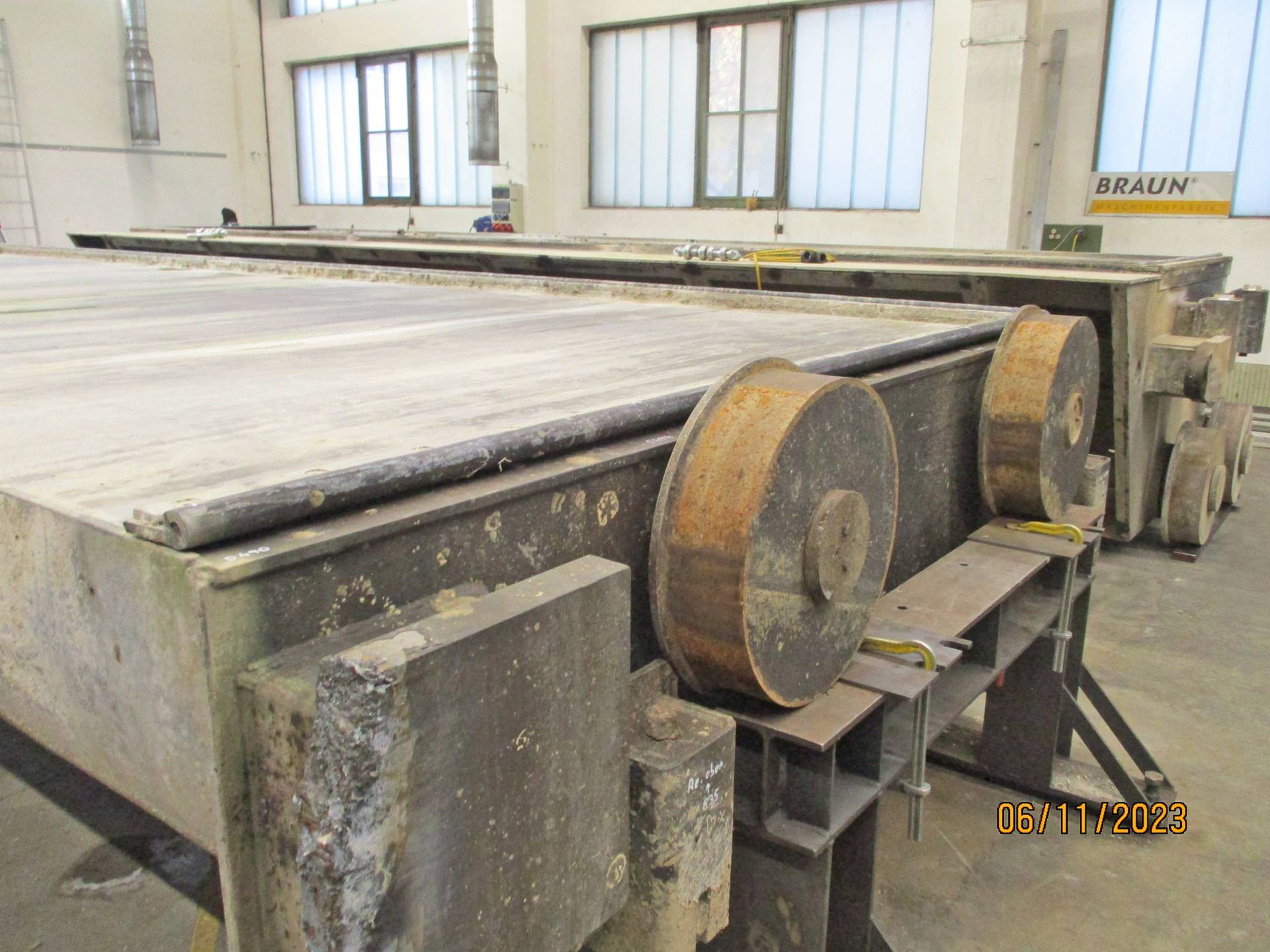
The order placed with Braun Maschinenfabrik in the summer of 2023 included the revision of the hydraulic system, overhauling the bottom outlet gate and regulating gate, the gate reinforcement, and the reinstallation and commissioning of the overall system. What sounds like a routine order turned out to be a much more complex project. Alfred Mayr (Dipl.-Ing. (FH)), Head of Sales Hydraulic Steel Construction at Braun, explains: “We soon realised the original order volume expected for work would be revised upwards when the two gates arrived at the factory.” It first really became apparent the job would be more comprehensive in the dismantling phase: “When dismantling, it was no longer possible to unbolt the bottom outlet due to corrosion, so the mounting brackets had to be cut off mechanically, new ones manufactured and then installed.” This was just the first unexpected additional expense the hydraulic steel constructors faced, but more was soon to come.
A leaky gate panel
A high-precision inspection and measurement of the components gave the steel construction experts an overview of the major and minor problems with the gates and their reinforcements. One key point was the deformation of the gate panel, which the engineers at Braun scrutinised more closely via FEA (Finite Element Analysis). Thomas Oberanzmair, an experienced expert at Braun Maschinenfabrik, explains: “The analysis revealed the panel had never been completely tight in theory or in practice,” and, resultantly, structural recalculation showed that the hydraulic steelwork in the lower part of the bottom outlet gate area needed to be slightly thicker. Oberanzmair expands on the subsequent unexpected additional task: “This forced the team to recalculate the statics completely, and required them to partially cut open the gate structure to weld in new beams and reinforcements.”
The undesirable vibrations made when the gate was being closed were another obvious consequence of the deformation of the gate panel; a problem solved by adding reinforcement.
© Braun
Imprecisely dimensioned reinforcement beams
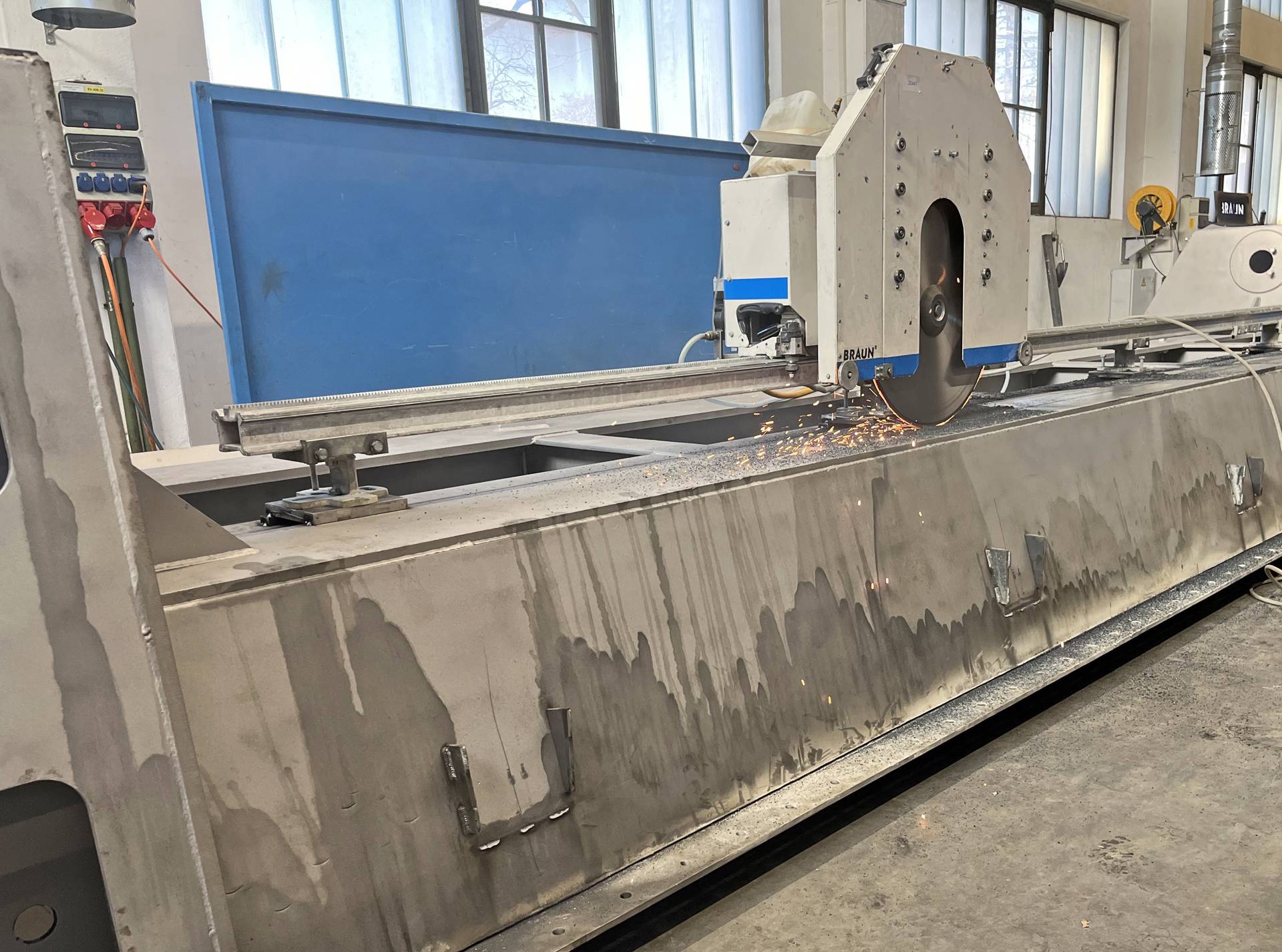
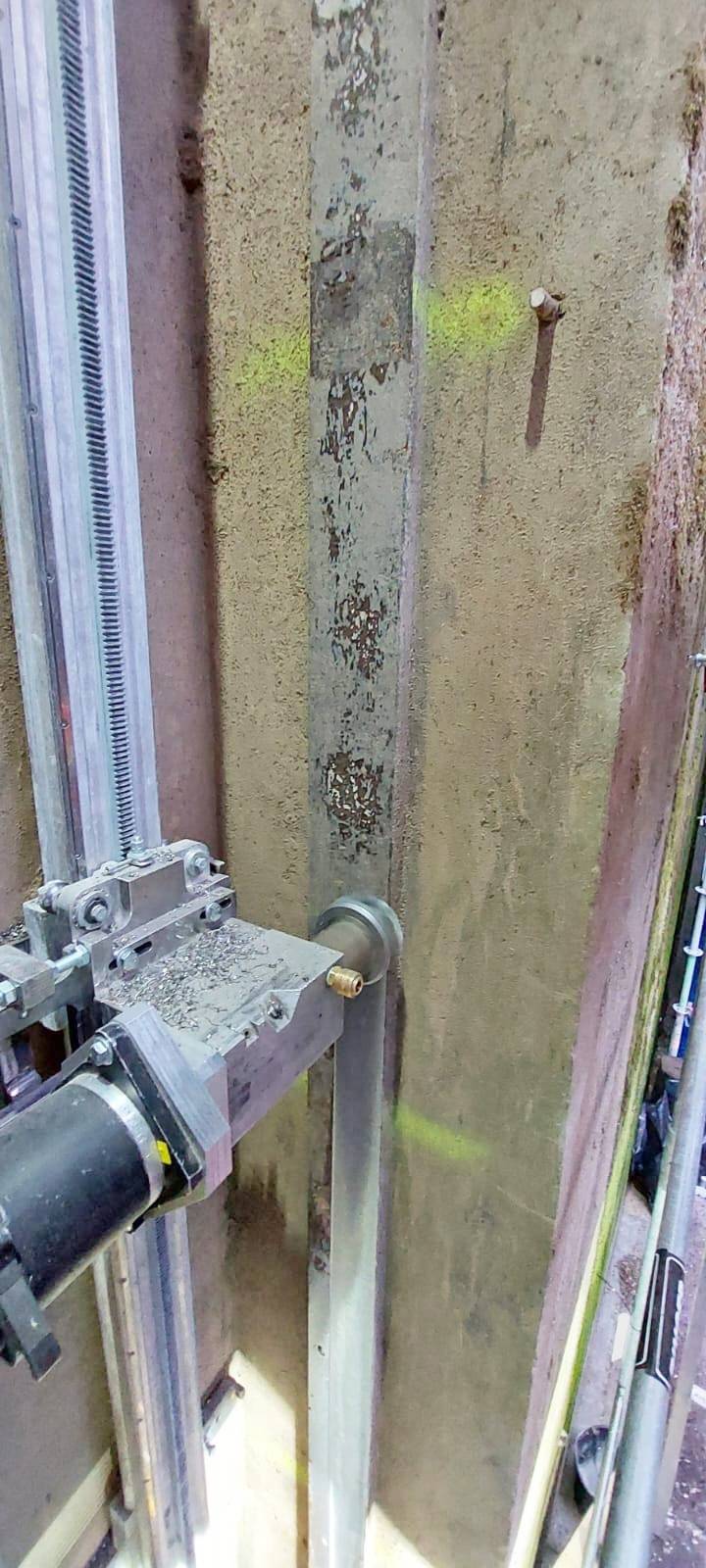
Another challenge was posed by the gate reinforcements in connection with the guide rails and sealing surfaces. When inspections were conducted following removal of the gates it became apparent these features also required renovation. On both sides of the gates, Braun‘s technicians identified deviations from the vertical in a double-digit millimetre range. Furthermore, the main guide rails for the rollers were very uneven. The main guide rails and, to a lesser extent, the counter-guides, were partially milled away to even out the surfaces, with new stainless steel strips welded on to seal the surfaces. In addition, the concrete immediately alongside the rail had to be cut away to create space for the wheel flange.
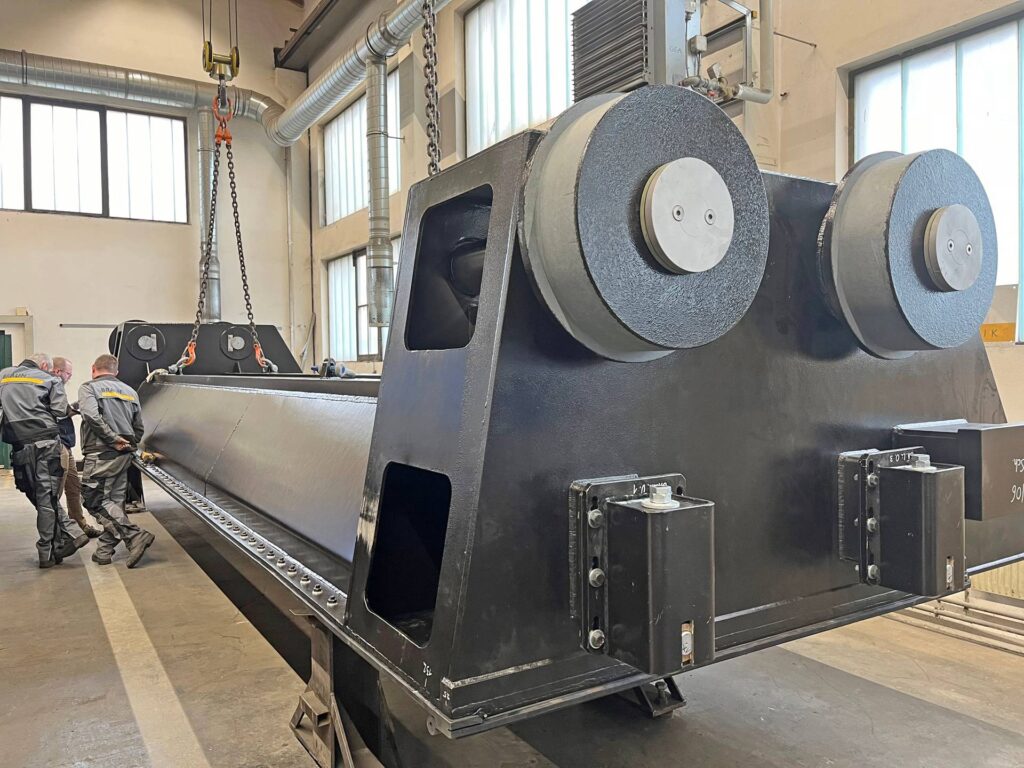
“The changes to the geometry of the reinforcement beams necessitated an adjustment to the diameter of the impellers. In concrete terms, this required that all the impellers be remanufactured,” explains Mayr.
© Wikipedia / Jkü
Extensive refurbishment programme
© Braun
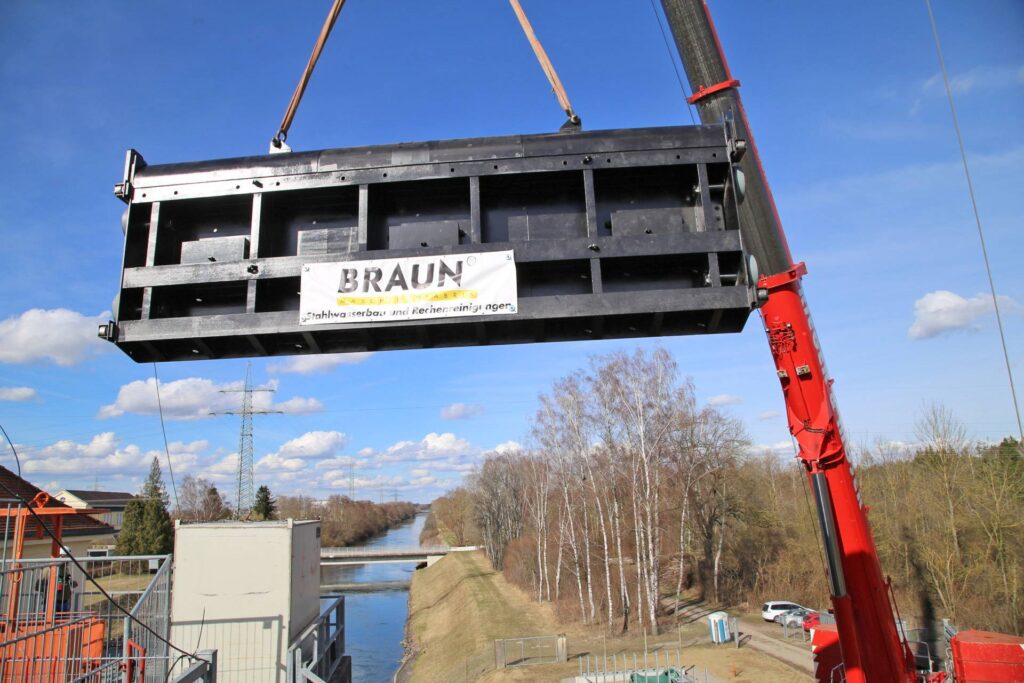
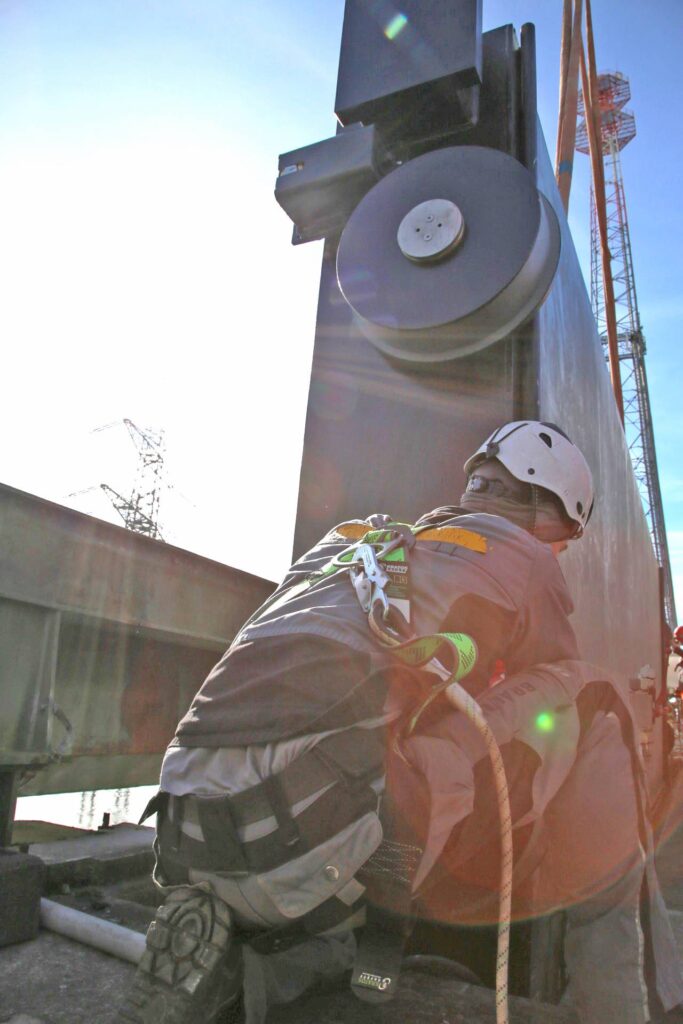
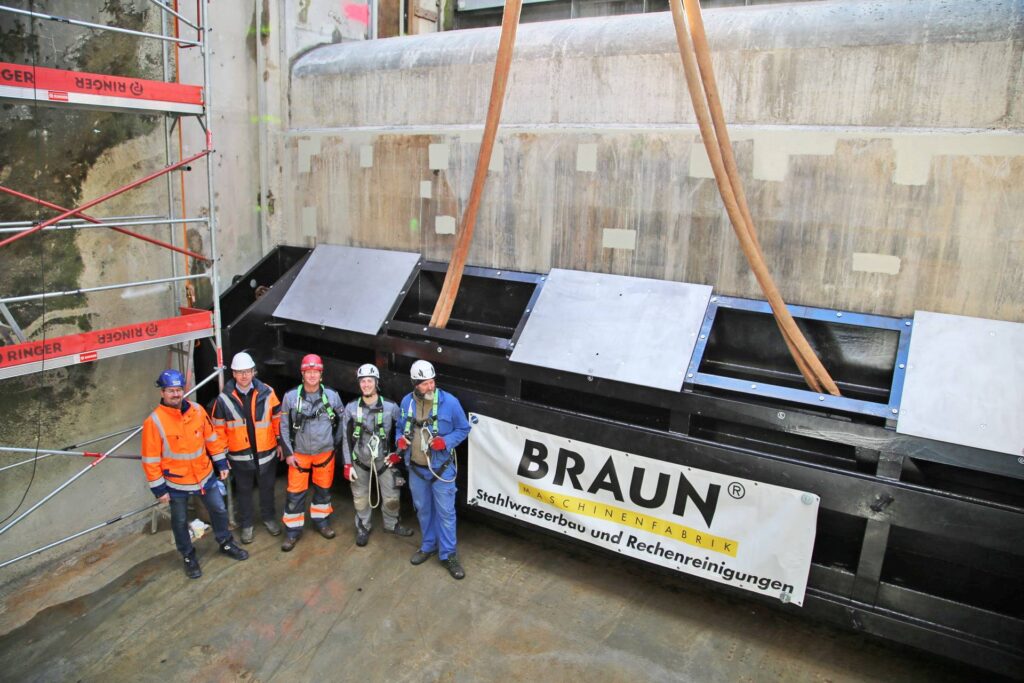
Regardless of how extensive the particular specifications became for the engineers at Braun Maschinenfabrik, the hydraulic steelwork components were nevertheless subjected to the usual lege artis refurbishment measures. After dismantling, treatment involved cleaning, sandblasting, surveying and the subsequent assessment of all components, including crack analyses. Once Braun’s own catalogue of measures had been drawn up, the next step was to implement those measures required and requested by the customer. This was followed by pre-assembly of the gates at Braun’s plant in Vöcklabruck and the application of anti-corrosion protection. After transporting and reassembling the regulating gate to the bypass channel it was time for a variety of function tests. In principle it was a comprehensive package of measures that the Upper Austrians were able to implement in their usual manner, but the numerous supplementary tasks made the customer’s original schedule for system completion and re-commissioning in December unviable. Braun Maschinenfabrik’s experienced team of hydraulic steelworkers was ultimately able to agree an extension with the customer until April, when the completed infrastructure was finally handed back to the customer and the bypass was able to resume regular operations.
First address for hydraulic steel construction
The Vöcklabruck company’s experienced hydraulic steelworkers were of course delighted to be able to add this problematic project to their long list of references, and were even more pleased with the praise and positive feedback from the client. They were thanked personally for their excellent cooperation and for the “successful implementation of what was by no means a run-of-the-mill order.” The refurbishment of the empty passage at the World Heritage power plant in Meitingen again showed that Braun Maschinenfabrik is one of the very best ports of call in European hydraulic steel construction – especially for unusual challenges. In a field as important as hydraulic steel construction it is the difficult tasks – ones that require profound expertise, experience, sensitivity and a sense of responsibility – that reveal which companies are truly up to the challenges.
© Braun